Giant Chickweed: A European Groundcover Making Itself at Home
If you’ve ever wandered through a moist woodland area and spotted delicate white star-shaped flowers carpeting the ground, you might have encountered giant chickweed (Myosoton aquaticum). This sprawling perennial has quite the collection of aliases – botanists have shuffled it through names like Stellaria aquatica, Cerastium aquaticum, and Malachium aquaticum over the years. But regardless of what you call it, this European native has made itself quite comfortable across much of North America.
Where You’ll Find Giant Chickweed
Giant chickweed has spread far from its European and Asian origins, establishing populations across a impressive swath of North America. You can find it thriving from British Columbia to Quebec in Canada, and throughout much of the eastern United States, from Connecticut down to North Carolina and as far west as Kansas and Minnesota. It’s also popped up in scattered locations in the western states.
- Species observed
- No observations
What Does Giant Chickweed Look Like?
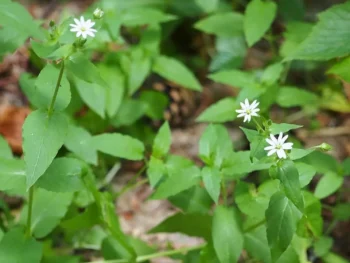
Don’t let the name fool you – while it’s called giant chickweed, this plant stays relatively modest in stature. As a forb (basically a fancy term for a non-woody flowering plant), it spreads along the ground creating a carpet-like effect rather than growing tall. The heart-shaped leaves and small white flowers with five deeply notched petals give it a delicate, almost ethereal appearance that can add a soft texture to shaded garden areas.
The flowers are small but charming, appearing as tiny white stars scattered across the foliage. While individually modest, they can create quite a display when the plant spreads into large patches.
Should You Plant Giant Chickweed?
Here’s where things get interesting. Giant chickweed occupies a gray area in the gardening world – it’s not native to North America, but it’s also not currently flagged as invasive or problematic. This puts it in the garden neutral zone where the choice really depends on your gardening philosophy and goals.
Reasons you might want it:
- Excellent ground cover for moist, shady areas where other plants struggle
- Low maintenance once established
- Provides some pollinator value for small insects
- Naturalizes well in woodland settings
- Hardy across USDA zones 3-8
Reasons you might skip it:
- Not native to North America
- Can spread aggressively and may crowd out other plants
- Limited wildlife benefits compared to native alternatives
- Self-seeds readily, which some gardeners find weedy
Native Alternatives to Consider
If you’re leaning toward supporting native biodiversity (and who isn’t these days?), consider these North American natives that fill similar roles:
- Wild ginger for shaded groundcover
- Foamflower for moist woodland areas
- Wild strawberry for edible groundcover
- Partridgeberry for evergreen carpet in shade
Growing Giant Chickweed Successfully
If you decide to give giant chickweed a try, you’ll find it refreshingly undemanding. This plant has adapted well to North American conditions and isn’t particularly fussy about its care.
Ideal Growing Conditions:
- Moist to wet soils (it has facultative wetland status in most regions)
- Partial shade to full sun, though it seems happiest with some shade
- Various soil types, from sandy to clay
- Cool, humid conditions
Planting and Care Tips:
- Plant in spring or fall when temperatures are moderate
- Space plants about 12 inches apart if you want quick coverage
- Water regularly during dry spells, especially in the first year
- Cut back after flowering if you want to prevent self-seeding
- Divide clumps every few years if they become too dense
Managing Its Enthusiasm
Giant chickweed can be… enthusiastic about spreading. While this makes it excellent for covering large areas quickly, it also means you’ll want to keep an eye on it. The good news is that it’s not particularly aggressive compared to truly invasive plants, and it’s easy to pull up if it wanders where you don’t want it.
Consider planting it in areas where you actually want something to spread and naturalize, like the edges of woodland gardens or around pond margins where its love of moisture will be an asset rather than a challenge.
The Bottom Line
Giant chickweed represents the complex reality of modern gardening – not every non-native plant is a villain, but not every well-behaved immigrant necessarily deserves a spot in your garden either. If you have a challenging moist, shady spot that needs covering and you’re not strictly focused on native-only gardening, giant chickweed could be a viable option. Just be prepared for its spreading habits and consider whether a native alternative might serve your garden’s ecosystem goals better.
Whatever you decide, remember that the best garden is one that brings you joy while supporting the broader web of life around us. Sometimes that means embracing well-behaved non-natives, and sometimes it means championing underappreciated natives. The choice, as they say, is yours to make.