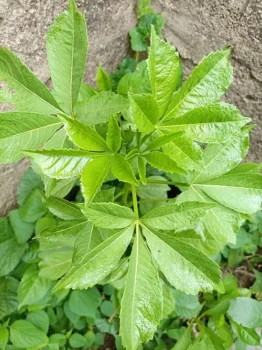
Five-Leaf Aralia (Ginseng): A Hardy Understory Shrub for Shade Gardens
Looking for a tough, low-maintenance shrub that thrives in shady spots where other plants struggle? Meet Eleutherococcus pentaphyllus, commonly known as ginseng or five-leaf aralia. This deciduous shrub might not be a garden superstar, but it’s certainly a reliable workhorse that deserves consideration for challenging garden situations.
What Is Five-Leaf Aralia?
Five-leaf aralia is a perennial, multi-stemmed woody shrub that typically grows 4-5 meters (13-16 feet) tall, though it often stays smaller in garden settings. True to its common name, this plant produces distinctive palmately compound leaves with five leaflets that create an attractive, tropical-looking foliage display. The plant is also known by several botanical synonyms, including Acanthopanax sieboldianus and Aralia pentaphylla.
Native Status and Distribution
Here’s where things get interesting: five-leaf aralia isn’t actually native to North America. Originally from eastern Asia, this adaptable shrub has established itself across parts of Canada and the United States, reproducing naturally without human assistance. You’ll find naturalized populations in Ontario, Connecticut, Indiana, Kentucky, Massachusetts, New York, Ohio, Pennsylvania, Utah, and West Virginia.
- Species observed
- No observations
While it’s not considered invasive in most areas, responsible gardeners might want to consider native alternatives that provide similar benefits to local ecosystems.
Garden Appeal and Landscape Role
Five-leaf aralia brings several appealing qualities to the garden:
- Attractive palmate leaves that add textural interest
- Small, greenish-white flowers in spring that attract pollinators
- Dark purple-black berries that provide food for birds
- Excellent tolerance for difficult growing conditions
This shrub works particularly well in woodland gardens, naturalized areas, and as an understory plant beneath larger trees. Its ability to thrive in shade makes it valuable for those tricky spots where sun-loving plants won’t cooperate.
Growing Conditions and Care
One of five-leaf aralia’s greatest strengths is its adaptability. This tough shrub thrives in USDA hardiness zones 4-8 and tolerates a wide range of growing conditions:
- Light: Partial shade to full shade (though it can handle some sun)
- Soil: Adaptable to various soil types, prefers moist, well-drained conditions
- Maintenance: Very low once established
- Urban tolerance: Excellent for city gardens with challenging conditions
Planting and Care Tips
Getting five-leaf aralia established is refreshingly straightforward:
- Plant in spring or fall when temperatures are moderate
- Dig a hole twice as wide as the root ball but no deeper
- Water regularly during the first growing season to establish roots
- Apply a 2-3 inch layer of mulch around the base
- Prune only as needed to maintain shape or remove dead wood
Wildlife Benefits
While specific wildlife benefits aren’t well-documented, five-leaf aralia does provide some ecological value. Its small flowers attract various pollinators, and the berries offer food for birds. However, native shrubs typically provide greater benefits to local wildlife and pollinators.
Consider Native Alternatives
If you’re drawn to five-leaf aralia’s shade tolerance and low-maintenance nature, consider these native alternatives that offer similar benefits:
- Spicebush (Lindera benzoin) – excellent for shade, supports native butterflies
- Elderberry (Sambucus canadensis) – produces edible berries and supports numerous wildlife species
- Serviceberry (Amelanchier species) – beautiful spring flowers and fall color
The Bottom Line
Five-leaf aralia is a practical choice for gardeners dealing with challenging shade conditions who want a low-maintenance, adaptable shrub. While it’s not native, it’s not currently considered problematic in most areas. However, when possible, choosing native alternatives will better support local ecosystems and provide greater benefits to wildlife. If you do decide to plant five-leaf aralia, you’ll have a reliable, tough shrub that asks for little but delivers consistent performance year after year.