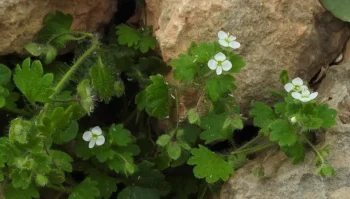
Glandular Speedwell: A Tiny Mediterranean Charmer for Moist Garden Spots
Meet glandular speedwell (Veronica cymbalaria), a petite annual that’s been quietly making itself at home in parts of the American South. This small but spirited member of the speedwell family brings a delicate Mediterranean flair to gardens, though it comes with some considerations for the environmentally conscious gardener.
What is Glandular Speedwell?
Glandular speedwell is a low-growing annual forb that produces tiny white or pale blue flowers with characteristically notched petals. The plant gets its glandular name from the small, sticky hairs that cover its stems and leaves. Also known by its scientific synonym Veronica glandulifera, this little speedwell forms spreading mats of small, rounded leaves topped with delicate flower spikes.
As a non-native species originally from the Mediterranean region, glandular speedwell has established itself in the wild in Louisiana and Maryland, where it reproduces without human intervention. While its invasive potential isn’t fully documented, responsible gardeners should be aware of its non-native status.
- Species observed
- No observations
Garden Appeal and Landscape Role
Don’t let its small stature fool you – glandular speedwell can be quite charming in the right setting. Here’s what it brings to the garden:
- Delicate beauty: Tiny flowers create a soft, airy texture
- Ground cover potential: Spreads to form low mats in moist areas
- Pollinator magnet: Small bees and flies appreciate the modest nectar offering
- Naturalizing habit: Self-seeds to create drifts in informal garden areas
This speedwell works best in cottage gardens, naturalized areas, or along the edges of moist borders where its subtle charm can be appreciated up close.
Growing Conditions and Care
Glandular speedwell is relatively easy to please, thriving in USDA hardiness zones 7-10. Here’s how to keep it happy:
Soil and Water: This little plant loves consistent moisture and well-draining soil. It’s classified as facultative for wetland conditions, meaning it can handle both wet and moderately dry spots, though it clearly prefers the moister end of the spectrum.
Light Requirements: Partial shade to full sun works well, with some afternoon shade appreciated in hotter climates.
Maintenance: Once established, glandular speedwell requires minimal care. As an annual, it completes its life cycle in one growing season but readily self-seeds for next year’s display.
Planting and Propagation
The easiest way to establish glandular speedwell is through seed. Since it self-seeds enthusiastically, you may find volunteer seedlings appearing in subsequent seasons. Sow seeds in spring after the last frost, barely covering them as they need light to germinate.
A Word of Caution
While glandular speedwell isn’t currently listed as invasive or noxious, its status as a non-native species that naturalizes readily deserves consideration. Before planting, consider these native alternatives that provide similar garden benefits:
- American speedwell (Veronica americana): A native speedwell with blue flowers
- Small skullcap (Scutellaria parvula): Low-growing native with small blue flowers
- Partridgeberry (Mitchella repens): Native ground cover for shady, moist areas
The Bottom Line
Glandular speedwell offers understated charm for gardeners who appreciate small-scale beauty and don’t mind a plant with wanderlust tendencies. While it’s not native to North America, it hasn’t been flagged as problematic in most areas. However, environmentally conscious gardeners might prefer exploring native alternatives that provide similar aesthetic appeal while supporting local ecosystems.
If you do choose to grow glandular speedwell, enjoy its delicate flowers and easy-care nature, but keep an eye on its spreading habits and consider removing it if it begins to venture beyond your garden boundaries.