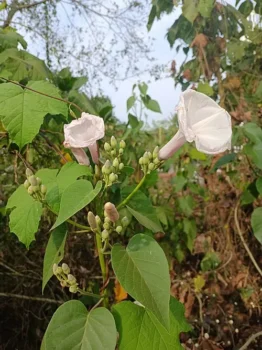
Gloria de la Mañana: A Showy Tropical Shrub for Warm Climate Gardens
If you’re looking to add a splash of tropical flair to your warm climate garden, gloria de la mañana (Ipomoea carnea) might just catch your eye. This perennial shrub brings year-round blooms and a relaxed, tropical vibe to landscapes in the warmest parts of the United States. But before you fall head over heels for its showy pink flowers, let’s dig into what makes this plant tick and whether it’s the right fit for your garden.
What Exactly Is Gloria de la Mañana?
Gloria de la mañana is a multi-stemmed woody shrub that typically grows 4 to 5 meters (13 to 16 feet) tall, though it can get taller under the right conditions. Think of it as the laid-back cousin of the morning glory vine – same family, different growth style. Instead of climbing and twining, this beauty grows as a sturdy shrub with heart-shaped leaves and trumpet-shaped flowers that range from soft pink to purple.
What really sets this plant apart is its generous blooming habit. While many plants take seasonal breaks, gloria de la mañana can flower year-round in frost-free climates, making it a reliable source of color when other plants might be taking a breather.
Where Does It Come From and Where Does It Grow?
Originally hailing from South America (particularly Argentina, Brazil, Paraguay, and Uruguay), gloria de la mañana has made itself at home in several U.S. states and territories. You’ll find it growing in Florida, Georgia, South Carolina, Texas, Puerto Rico, the Virgin Islands, and Palau. It’s considered a non-native species that reproduces on its own in these areas.
- Species observed
- No observations
The Good, The Bad, and The Bloomy
Why you might love it:
- Spectacular, showy flowers that attract butterflies, bees, and hummingbirds
- Nearly year-round blooming in warm climates
- Drought tolerant once established
- Low maintenance and easy to grow
- Makes an excellent specimen plant or backdrop shrub
Why you might want to think twice:
- It’s not native to the U.S., so it doesn’t support local ecosystems as well as native alternatives
- Only suitable for the warmest climates (USDA zones 9-11)
- Can get quite large and may need regular pruning
- Frost will damage or kill the plant
Growing Gloria de la Mañana Successfully
If you decide this tropical beauty is right for your garden, here’s how to keep it happy:
Location and Soil: Choose a spot with full sun to partial shade and well-draining soil. This plant is pretty adaptable when it comes to soil types, but soggy conditions are a no-go. According to wetland classifications, it’s primarily an upland plant that prefers drier conditions.
Planting: You can start gloria de la mañana from seeds or cuttings. Spring is the best time to plant, giving the shrub a full growing season to establish before any potential cold snaps.
Watering: Water regularly during the first year to help establish roots, then back off. Once mature, this plant is quite drought tolerant and prefers to dry out between waterings.
Maintenance: Pruning is your main task with this plant. It can get quite large, so regular trimming will keep it in bounds and encourage bushier growth. Remove any frost-damaged portions in spring if you’re in a borderline climate zone.
Climate Considerations
Gloria de la mañana is strictly a warm-climate plant, thriving in USDA hardiness zones 9-11. If you’re in zone 8 or cooler, this isn’t the plant for you – frost will either severely damage it or kill it outright. In borderline areas, you might be able to grow it in a protected microclimate or as an annual, but don’t expect it to survive freezing temperatures.
Wildlife and Pollinator Benefits
One of the bright spots of growing gloria de la mañana is its appeal to pollinators. The large, trumpet-shaped flowers are magnets for butterflies and bees, while hummingbirds also appreciate the nectar. If you’re trying to create a pollinator-friendly garden in a warm climate, this plant can certainly contribute to that goal.
Consider Native Alternatives
While gloria de la mañana can be a beautiful addition to warm climate gardens, consider exploring native alternatives that will better support your local ecosystem. Native plants like coral honeysuckle (Lonicera sempervirens), trumpet creeper (Campsis radicans), or native hibiscus species can provide similar tropical appeal while supporting local wildlife and requiring less maintenance once established.
The Bottom Line
Gloria de la mañana is a showstopper that can add serious tropical appeal to warm climate gardens. If you live in zones 9-11 and want a low-maintenance shrub with spectacular flowers and pollinator appeal, it might be worth considering. Just remember that choosing native plants when possible is always the most environmentally friendly option. Whatever you decide, make sure you’re prepared for a plant that likes to make a statement – both in size and in bloom!