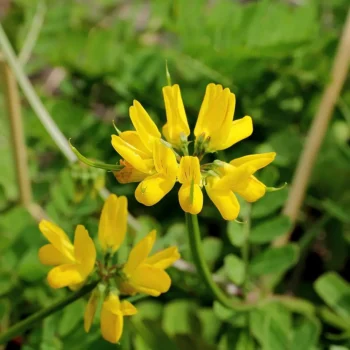
Goat Pea: A Mediterranean Annual for Southern Gardens
Meet goat pea (Securigera securidaca), a charming little annual that’s made its way from the sun-soaked Mediterranean to establish itself in parts of the American South. While it may not be a native wildflower, this petite legume has some interesting qualities that might catch a gardener’s eye – or make them think twice.
What Exactly Is Goat Pea?
Goat pea is an annual forb, which is just a fancy way of saying it’s a soft-stemmed herbaceous plant that completes its life cycle in one year. You might also see it listed under its former names Coronilla securidaca or Bonaveria securidaca in older gardening references. This little plant belongs to the legume family, which means it has the nifty ability to fix nitrogen in the soil.
As a non-native species, goat pea originally hails from the Mediterranean region and Southern Europe. It’s managed to establish itself and reproduce on its own in parts of the United States, particularly in South Carolina, where it now grows wild without any human intervention.
- Species observed
- No observations
What Does Goat Pea Look Like?
Don’t expect towering garden drama from goat pea – this is a modest little plant with understated charm. It produces clusters of small, bright yellow flowers that look distinctly pea-like, which makes sense given its family ties. The leaves are pinnately compound, creating a delicate, fern-like texture that adds subtle interest to any planting area.
Where and How to Grow Goat Pea
If you’re gardening in USDA hardiness zones 7 through 10, goat pea might survive in your area. This Mediterranean native prefers:
- Well-drained soils (it really doesn’t like wet feet)
- Full sun to partial shade locations
- Minimal fuss and intervention once established
As a self-seeding annual, goat pea tends to take care of its own propagation needs. Once you have it established, it will likely return year after year through self-sown seeds, though individual plants only live for one growing season.
Garden Role and Design Considerations
Goat pea works best in naturalized areas and wildflower meadows rather than formal garden beds. Its modest size and informal growth habit make it a good candidate for:
- Ground cover in casual landscape areas
- Nitrogen-fixing companion in mixed plantings
- Filler in wildflower seed mixes
Wildlife and Pollinator Benefits
The small yellow flowers do provide nectar for bees and other small pollinators, adding some wildlife value to your garden. As a legume, it also contributes to soil health by fixing atmospheric nitrogen.
Should You Plant Goat Pea?
Here’s where things get a bit nuanced. Goat pea isn’t listed as invasive or noxious, so there’s no urgent reason to avoid it. However, since it’s not native to North America, it won’t provide the same ecological benefits as indigenous plants that co-evolved with local wildlife.
If you’re drawn to small yellow legume flowers and nitrogen-fixing abilities, consider these native alternatives instead:
- Wild senna (Senna hebecarpa) for larger yellow blooms
- Partridge pea (Chamaecrista fasciculata) for similar delicate yellow flowers
- Wild lupine (Lupinus perennis) for blue flowers and nitrogen-fixing benefits
The Bottom Line
Goat pea is a harmless little plant that can add some Mediterranean charm to Southern gardens, particularly in naturalized settings. While it won’t harm your local ecosystem, choosing native alternatives will better support regional wildlife and contribute to local biodiversity. If you do decide to grow goat pea, just be aware that it may self-seed and return in future years – which could be a feature or a bug, depending on your gardening style!