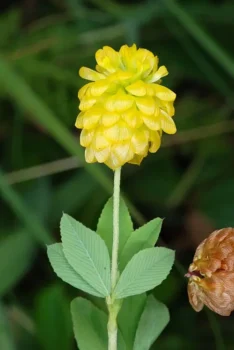
Golden Clover: A Cheerful Non-Native Addition to Your Garden
If you’ve ever spotted clusters of bright yellow flowers dotting roadsides and meadows, you’ve likely encountered golden clover (Trifolium aureum). This charming little plant brings sunny bursts of color to gardens and naturalized areas, though it’s important to know that it’s not a North American native.
What Is Golden Clover?
Golden clover is a small annual or biennial forb that belongs to the legume family. Also known by its synonym Trifolium agrarium, this herbaceous plant lacks woody tissue and produces distinctive bright yellow flower heads that eventually fade to a golden-brown color as they age – hence the golden in its common name.
Where Does Golden Clover Come From?
Originally hailing from Europe and western Asia, golden clover is a non-native species that has made itself quite at home across North America. It’s now established and reproducing on its own throughout most of the United States, Canada, and even Alaska. You’ll find it growing from coast to coast, from Alberta to Georgia, and everywhere in between.
- Species observed
- No observations
Should You Plant Golden Clover?
While golden clover isn’t native to North America, it’s not considered invasive or noxious either. This puts it in a neutral category where the choice is really up to you and your gardening goals.
Reasons You Might Want Golden Clover:
- Bright, cheerful yellow flowers that bloom from late spring through summer
- Attracts beneficial pollinators like bees and butterflies
- Thrives in poor soils where other plants struggle
- Requires minimal care once established
- Self-seeds readily for naturalized areas
- Drought tolerant
Consider Native Alternatives Instead:
If you prefer supporting native ecosystems, consider these North American native clovers and legumes that offer similar benefits:
- Red clover (Trifolium pratense) – though this is also non-native, look for native lupines instead
- Wild lupine (Lupinus perennis)
- Partridge pea (Chamaecrista fasciculata)
- Wild senna (Senna hebecarpa)
Growing Golden Clover Successfully
If you decide to grow golden clover, you’ll find it refreshingly low-maintenance. This adaptable little plant is quite forgiving and doesn’t demand much from gardeners.
Ideal Growing Conditions:
- Sunlight: Full sun (6+ hours daily)
- Soil: Well-drained soils; tolerates poor, sandy, or rocky conditions
- Water: Drought tolerant once established; moderate water during germination
- Climate: Hardy in USDA zones 3-9
Planting and Care Tips:
- Sow seeds directly in fall or early spring
- Scatter seeds on prepared soil surface – they need light to germinate
- Water gently until seedlings establish
- No fertilizer needed – like other legumes, it fixes its own nitrogen
- Allow some plants to go to seed for natural reseeding
- Deadhead spent flowers if you want to prevent self-seeding
Garden Design Ideas
Golden clover works beautifully in several garden settings:
- Wildflower meadows and naturalized areas
- Cottage garden borders
- Ground cover for difficult slopes
- Pollinator gardens (though native alternatives are preferable)
- Low-maintenance areas where you want seasonal color
Pollinator and Wildlife Benefits
While not native, golden clover does provide nectar and pollen for various beneficial insects including honey bees, bumblebees, and butterflies. The seeds may also provide food for small birds, though native plants typically offer superior wildlife value.
The Bottom Line
Golden clover is an easy-going plant that can add cheerful color to your garden with minimal fuss. While it’s not native to North America, it’s not problematic either. If you’re drawn to its sunny disposition and low-maintenance nature, it can be a reasonable choice for naturalized areas. However, if supporting native ecosystems is a priority, consider exploring native alternatives that provide similar aesthetic appeal while offering superior benefits to local wildlife.
Whatever you choose, remember that every garden is a personal expression, and the best plants are the ones that bring you joy while fitting your gardening goals and local conditions.