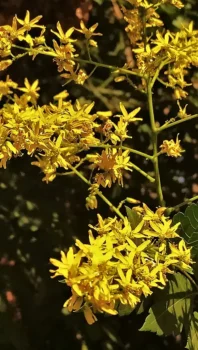
Goldenrain Tree: A Beautiful but Problematic Non-Native
The goldenrain tree (Koelreuteria paniculata) is one of those plants that perfectly illustrates the complex relationship between beauty and ecological responsibility in gardening. With its stunning yellow flower clusters and distinctive papery seed pods, this tree has charmed gardeners across the United States. However, there’s more to this story than meets the eye.
What Is the Goldenrain Tree?
Originally hailing from China, Korea, and Japan, the goldenrain tree is a deciduous tree that typically reaches 30-45 feet in height at maturity. Also known by its scientific name Koelreuteria paniculata (and sometimes listed under the synonym Koelreuteria apiculata), this perennial woody species has established itself far from its native homeland.
The tree gets its common name from its spectacular late spring display of bright yellow flowers arranged in large, showy clusters. These blooms are followed by equally eye-catching papery seed pods that start green and mature to a warm brown color, persisting well into fall and providing extended visual interest.
Where You’ll Find It Growing
The goldenrain tree has spread far beyond its original range and now grows wild in 22 states across the United States, including Alabama, Delaware, Florida, Illinois, Indiana, Kansas, Kentucky, Louisiana, Maryland, Massachusetts, Missouri, New Jersey, New York, North Carolina, Ohio, Pennsylvania, Tennessee, Texas, Utah, Virginia, and West Virginia.
- Species observed
- No observations
The Invasive Reality
Here’s where things get complicated. While the goldenrain tree is undeniably attractive, it’s classified as invasive in Delaware, and its ability to reproduce spontaneously in the wild without human intervention raises concerns about its ecological impact. The tree produces abundant seeds (about 2,900 per pound!) that can establish new populations, potentially crowding out native species.
Our recommendation: Consider native alternatives instead of planting goldenrain tree. Your local ecosystem will thank you, and you’ll still get beautiful blooms and fall interest from species that naturally belong in your area.
Native Alternatives to Consider
Instead of goldenrain tree, consider these native alternatives that offer similar benefits:
- American Basswood (Tilia americana) – Fragrant flowers beloved by pollinators
- Tulip Tree (Liriodendron tulipifera) – Stunning tulip-shaped flowers and impressive fall color
- Black Gum (Nyssa sylvatica) – Brilliant fall foliage and wildlife value
- Eastern Redbud (Cercis canadensis) – Early spring pink blooms and heart-shaped leaves
If You Already Have One: Care and Management
If you already have a goldenrain tree on your property, here’s what you should know about its growing requirements and management:
Growing Conditions
Goldenrain trees are remarkably adaptable, which partially explains their success as an invasive species:
- Soil: Tolerates coarse, medium, and fine-textured soils with pH ranging from 4.5 to 8.0
- Water: Medium moisture requirements with decent drought tolerance once established
- Sunlight: Prefers full sun (shade intolerant)
- Climate: Hardy in USDA zones 5-9 (tolerates temperatures down to -28°F)
Growth Characteristics
Understanding how this tree grows can help you manage it responsibly:
- Growth rate: Slow to moderate
- Mature size: 45 feet tall and up to 30 feet wide
- Form: Single-stemmed with an upright, erect growth habit
- Lifespan: Moderate (typically 50-75 years)
Responsible Management
If you choose to keep an existing goldenrain tree, practice responsible management:
- Remove seed pods before they mature and disperse to prevent spread
- Consider gradual replacement with native species
- Never plant new goldenrain trees, especially in or near natural areas
- Monitor for seedlings around your property and remove them promptly
Wildlife and Pollinator Considerations
While the goldenrain tree does provide some benefits to wildlife—its flowers attract bees and other pollinators during its late spring bloom period—these benefits don’t outweigh the ecological concerns. Native trees typically provide far more comprehensive support for local wildlife, offering not just nectar but also host plants for native insects and appropriate food sources for birds and other creatures.
The Bottom Line
The goldenrain tree serves as a perfect example of why we need to think beyond just aesthetics when choosing plants for our gardens. While it’s certainly beautiful and easy to grow, its invasive tendencies make it a poor choice for environmentally conscious gardeners. By choosing native alternatives, you can enjoy similar beauty while supporting your local ecosystem and helping preserve biodiversity for future generations.
Remember: every plant we choose is a vote for the kind of environment we want to create. Let’s make those votes count for native biodiversity and ecological health!