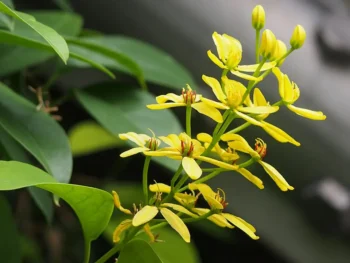
Goldshower (Galphimia): A Bright Tropical Shrub for Warm Climate Gardens
If you’re looking for a cheerful flowering shrub that brings sunshine to your garden year-round, you might want to meet goldshower. This vibrant plant lives up to its common name with cascades of bright yellow blooms that seem to glow against its glossy green foliage. While not native to most of the United States, goldshower has found a home in the warmest corners of our country.
What is Goldshower?
Goldshower (Galphimia) is a perennial shrub that typically grows as a multi-stemmed woody plant, usually staying under 13-16 feet tall. Think of it as nature’s way of creating a living bouquet – compact, manageable, and constantly in bloom in the right conditions. Originally from Central and South America, particularly Mexico, this tropical beauty has made its way into warm-climate gardens across the southern United States.
Where Does Goldshower Grow?
In the United States, you’ll find goldshower growing in Florida, Texas, Puerto Rico, and the U.S. Virgin Islands. It’s worth noting that while this plant isn’t native to the lower 48 states, it has naturalized in Puerto Rico and the U.S. Virgin Islands, where it reproduces on its own and has become part of the local landscape.
- Species observed
- No observations
Why Consider Goldshower for Your Garden?
There are several reasons why gardeners in warm climates might fall for this golden beauty:
- Continuous blooming in favorable conditions
- Low maintenance once established
- Attracts butterflies and bees with nectar-rich flowers
- Drought tolerant after the first growing season
- Compact size makes it perfect for smaller spaces
- Works well as a hedge, accent plant, or in containers
Growing Conditions and Care
Goldshower is surprisingly easy-going for such a showstopper. Here’s what it needs to thrive:
Climate Requirements: This tropical shrub is only hardy in USDA zones 9-11, so it’s definitely a warm-weather plant. If you live somewhere that sees frost, you’ll want to grow it in a container that can come indoors during winter.
Light and Soil: Goldshower loves full sun but can tolerate some partial shade. The key to happy roots is well-draining soil – this plant doesn’t like wet feet. It’s quite adaptable to different soil types as long as drainage is good.
Watering: During its first year, keep the soil consistently moist to help establish strong roots. After that, goldshower becomes quite drought tolerant, though it will bloom more profusely with regular watering during dry spells.
Maintenance: This is where goldshower really shines – it’s refreshingly low-maintenance. Minimal pruning is needed, just remove any dead or damaged branches. The plant naturally maintains a nice shape on its own.
Landscape Uses
Goldshower fits beautifully into several garden styles:
- Tropical and subtropical gardens as a flowering accent
- Xeriscaped gardens for its drought tolerance
- Container gardens on patios and decks
- Informal hedges for a burst of color
- Pollinator gardens to attract beneficial insects
A Word About Native Alternatives
While goldshower can be a lovely addition to warm-climate gardens, it’s worth considering native alternatives that provide similar benefits while supporting local ecosystems. Depending on your location, native flowering shrubs like wild senna (Senna species), firebush (Hamelia patens), or native Cassia species can offer beautiful yellow flowers and excellent pollinator support.
The Bottom Line
Goldshower is a charming, low-maintenance shrub that can bring tropical flair to gardens in the warmest parts of the United States. Its continuous blooms, easy care, and pollinator appeal make it an attractive option for gardeners in zones 9-11. While it’s not native to most of the U.S., it’s not considered invasive either, making it a reasonable choice for those seeking reliable color in their warm-climate gardens. Just remember to consider native alternatives that might provide similar beauty while supporting local wildlife even more effectively.