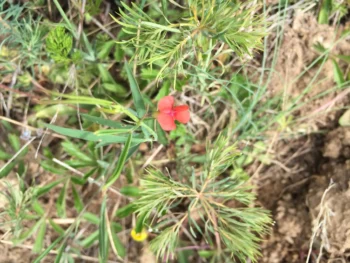
Grass Pea: A Mediterranean Annual That’s Made Itself at Home
If you’ve been exploring drought-tolerant plants or wandering through naturalized areas in the Pacific Northwest and California, you might have encountered the delicate purple blooms of grass pea (Lathyrus sphaericus). This small annual legume has quite the story – originally from the Mediterranean, it’s now established itself as a naturalized resident across several western states.
What Exactly Is Grass Pea?
Grass pea is an annual herb that belongs to the pea family, and true to its legume heritage, it produces those characteristic pea-like flowers in soft purple-pink hues. As a forb, it’s a non-woody plant that completes its entire life cycle in a single growing season. Don’t let its delicate appearance fool you – this little plant has proven quite adaptable to various growing conditions.
Where You’ll Find It Growing
While grass pea originally called the Mediterranean region home, it’s now established populations in several western states and even made its way up to British Columbia. You’ll find it growing in California, Oregon, Washington, and southern Canada, where it has naturalized and reproduces on its own without any human help.
- Species observed
- No observations
The Garden Appeal
So what makes grass pea interesting for gardeners? Here are its main attractions:
- Delicate purple-pink flowers that add subtle color to garden spaces
- Low-maintenance growth habit once established
- Drought tolerance, making it suitable for water-wise gardens
- Attracts bees and other small pollinators
- Works well in naturalized or wildflower garden settings
Growing Conditions and Care
Grass pea isn’t particularly fussy about its growing conditions, which probably explains how it’s managed to establish itself across such a wide geographic range. Here’s what it prefers:
- Sunlight: Full sun to partial shade
- Soil: Well-drained soils; it’s quite adaptable to different soil types
- Water: Drought tolerant once established, though it appreciates some moisture during germination
- Climate zones: Best suited for USDA zones 8-10
Wetland Tolerance
Interestingly, grass pea shows different preferences depending on the region. In the Arid West, it tends to stick to upland areas but can occasionally pop up in wetlands. In the Western Mountains, Valleys, and Coast regions, it’s more flexible and equally happy in both wet and dry locations.
Should You Plant It?
Here’s where things get nuanced. Grass pea is a non-native plant that has naturalized in North America, meaning it reproduces and persists in the wild without human intervention. While it’s not currently listed as invasive or noxious, it’s worth considering whether you want to add another non-native species to your garden.
If you’re drawn to grass pea’s delicate charm and drought tolerance, you might want to explore native alternatives that offer similar benefits:
- Native lupines (Lupinus species) for similar pea-family flowers
- Regional wildflower mixes that include native legumes
- Native clovers that provide similar pollinator benefits
The Bottom Line
Grass pea is one of those plants that sits in the middle ground – not problematic enough to avoid entirely, but not native enough to champion wholeheartedly. If you decide to grow it, you’ll have a low-maintenance annual that brings subtle beauty and some pollinator value to your garden. Just remember that supporting native plant communities is always the gold standard for ecological gardening.
Whatever you choose, the most important thing is creating a garden space that brings you joy while supporting the broader ecosystem around you.