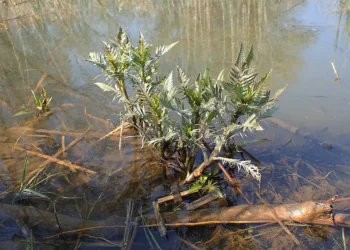
Great Yellowcress: A Water-Loving Perennial for Wet Gardens
If you’ve got a soggy spot in your yard that seems impossible to plant, great yellowcress (Rorippa amphibia) might just be the solution you’re looking for. This hardy perennial has made itself quite at home in wet areas across parts of North America, though it originally hails from much farther away.
What is Great Yellowcress?
Great yellowcress is a non-native perennial forb that belongs to the mustard family. You might also see it listed under its older scientific names like Nasturtium amphibium or Sisymbrium amphibium in some older gardening references. As a forb, it’s essentially an herbaceous plant without woody stems – think of it as the opposite of a shrub or tree.
This resilient plant has established itself as a naturalized species, meaning it reproduces on its own in the wild without any help from gardeners. While it’s not originally from North America, it has found a comfortable niche in our ecosystems.
Where Does Great Yellowcress Grow?
Currently, you’ll find great yellowcress growing in Connecticut, Quebec, Maine, and Massachusetts. Its distribution is relatively limited compared to some other naturalized plants, staying primarily in the northeastern regions.
- Species observed
- No observations
Why Consider Great Yellowcress for Your Garden?
Great yellowcress shines in situations where many other plants struggle. Here’s what makes it appealing:
- Thrives in consistently wet conditions where other plants might rot
- Forms attractive ground cover in challenging wet areas
- Produces clusters of small yellow flowers that attract various pollinators
- Extremely low maintenance once established
- Hardy in USDA zones 3-8, making it suitable for colder climates
Garden Design and Landscape Role
This plant works best as a ground cover in water gardens, rain gardens, or naturalized wet areas. It’s not going to be the star of your formal flower border, but it excels at filling in those tricky spots near ponds, in boggy areas, or anywhere the soil stays consistently moist.
Great yellowcress is particularly well-suited for:
- Water garden edges
- Bog gardens
- Rain garden plantings
- Naturalized wetland areas
- Pond margins
Growing Conditions and Care
The beauty of great yellowcress lies in its simplicity. This plant has straightforward needs:
Light: Full sun to partial shade – it’s quite adaptable
Water: Loves wet feet! It’s classified as a facultative wetland plant, meaning it usually grows in wetlands but can tolerate some drier conditions
Soil: Any soil type, as long as it stays consistently moist to wet
Maintenance: Minimal – just let it do its thing
Wildlife and Pollinator Benefits
The small yellow flowers of great yellowcress provide nectar and pollen for various small insects, including flies and smaller bee species. While it may not be a showstopper for large butterflies, it contributes to the overall ecosystem by supporting smaller pollinators that are often overlooked.
Important Considerations
Before you rush out to find great yellowcress, here are a few things to keep in mind:
Since this is a non-native species, you might want to consider native alternatives that provide similar benefits. Some excellent native options for wet areas include:
- Wild bergamot (Monarda fistulosa)
- Blue flag iris (Iris versicolor)
- Swamp milkweed (Asclepias incarnata)
- Cardinal flower (Lobelia cardinalis)
These native plants will provide similar ground cover and wet-soil tolerance while supporting local ecosystems more directly.
The Bottom Line
Great yellowcress can be a practical solution for challenging wet areas in your landscape, especially if you’re looking for something virtually bulletproof. While it’s not native to North America, it’s not considered invasive either – it’s simply found its niche and settled in. If you’re dealing with a persistently wet area and want something reliable, great yellowcress might fit the bill. Just remember to consider native alternatives first, as they’ll provide even greater benefits to local wildlife and ecosystems.
Whether you choose great yellowcress or go with a native alternative, the key is finding plants that work with your site conditions rather than against them. In the case of wet, challenging areas, sometimes the best approach is to embrace the moisture and work with plants that actually love getting their feet wet!