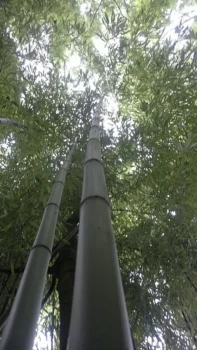
Greenwax Golden Bamboo: A Striking But Demanding Garden Addition
If you’re looking to add some dramatic flair to your landscape, greenwax golden bamboo (Phyllostachys viridiglaucescens) certainly knows how to make an entrance. This eye-catching bamboo species brings a touch of Asian elegance to gardens with its stunning golden-yellow stems accented by green stripes. But before you fall head over heels for its good looks, there are some important things every gardener should know about this non-native beauty.
What Makes Greenwax Golden Bamboo Special
This perennial bamboo is classified as a graminoid – essentially a fancy way of saying it’s grass-like, though much more dramatic than your average lawn grass! What sets greenwax golden bamboo apart is its gorgeous coloration. The culms (bamboo speak for stems) display a beautiful golden-yellow color with distinctive green striping that creates a truly stunning visual display in the landscape.
As a fast-growing species, this bamboo can quickly establish itself and create the screening or specimen effect you’re after. Its graceful, arching growth habit adds movement and texture to garden spaces, making it particularly popular in contemporary and Asian-themed landscape designs.
Where Does It Come From?
Originally native to China, greenwax golden bamboo has made its way to North American gardens as an introduced ornamental species. Currently, it’s been documented growing in New Jersey, where it has established itself and reproduces without human intervention.
- Species observed
- No observations
The Good, The Bad, and The Bamboo
Let’s be honest – bamboo has a reputation, and not always a good one. While greenwax golden bamboo offers undeniable aesthetic appeal, it comes with some serious considerations:
The Positives:
- Stunning golden-yellow stems with green stripes
- Fast growth for quick screening and privacy
- Excellent for erosion control on slopes
- Hardy in USDA zones 6-10
- Adds exotic texture to garden designs
The Challenges:
- Can spread aggressively if not properly contained
- Requires constant management to prevent takeover
- Limited wildlife and pollinator benefits
- May become problematic in natural areas
Growing Greenwax Golden Bamboo Successfully
If you decide to grow this bamboo, success depends heavily on proper planning and containment strategies.
Ideal Growing Conditions:
- Full sun to partial shade exposure
- Moist, well-draining soil
- Protection from strong winds
- Adequate space for mature size
Essential Planting and Care Tips:
- Install rhizome barriers at least 30 inches deep to prevent spreading
- Provide regular watering, especially during establishment
- Apply balanced fertilizer annually in spring
- Remove dead or damaged culms each year
- Monitor regularly for escaped growth beyond barriers
Consider Native Alternatives
While greenwax golden bamboo can be grown responsibly with proper containment, consider these native alternatives that offer similar benefits without the management headaches:
- Native bunch grasses for texture and movement
- Elderberry (Sambucus canadensis) for fast screening
- Spicebush (Lindera benzoin) for golden fall color
- Native willows for quick growth and erosion control
The Bottom Line
Greenwax golden bamboo is undeniably beautiful and can be a stunning addition to the right garden setting. However, it requires committed, ongoing management to prevent it from becoming a maintenance nightmare or ecological problem. If you choose to grow it, invest in proper containment from day one and be prepared for regular monitoring and maintenance.
For most gardeners, exploring native alternatives might provide similar aesthetic benefits with far less risk and maintenance. Whatever you choose, make sure it fits both your garden goals and your long-term commitment to responsible gardening practices.