Ground Ivy: Why This Vigorous Ground Cover Might Not Be Your Garden’s Best Friend
If you’ve ever noticed a dense carpet of small, kidney-shaped leaves spreading across shady areas of your yard, chances are you’ve encountered ground ivy (Glechoma hederacea). Also known as creeping charlie, this perennial plant might look like an attractive ground cover solution, but there’s more to this vigorous spreader than meets the eye.
What Is Ground Ivy?
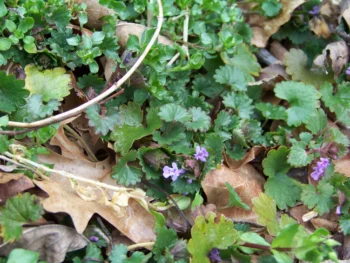
Ground ivy is a low-growing perennial forb that belongs to the mint family. True to its mint relatives, it spreads aggressively through underground runners, creating dense mats that can quickly cover large areas. The plant produces small, rounded leaves with scalloped edges and tiny purple flowers that bloom in early spring.
Originally from Europe and southwestern Asia, ground ivy has made itself at home across North America, now growing in nearly every U.S. state and Canadian province from Alaska to Florida.
- Species observed
- No observations
The Problem with Ground Ivy
Here’s where things get complicated for gardeners. While ground ivy might seem like a low-maintenance solution for difficult spots, it comes with some serious drawbacks:
- It’s classified as invasive in North Carolina and potentially invasive in Connecticut
- Once established, it’s extremely difficult to remove
- It can outcompete native plants and disrupt local ecosystems
- It spreads rapidly through both runners and seeds
Why Some Gardeners Are Tempted
Despite its invasive nature, ground ivy does have characteristics that appeal to frustrated gardeners:
- Thrives in challenging conditions where other plants struggle
- Tolerates shade and poor soil
- Requires minimal care once established
- Provides early spring nectar for bees and other pollinators
- Creates a dense ground cover that suppresses weeds
Growing Conditions
Ground ivy is remarkably adaptable, which contributes to its invasive success. It grows best in:
- Partial to full shade
- Moist to average soil conditions
- USDA hardiness zones 3-10
- Areas with consistent moisture, though it tolerates some drought
The plant typically stays low to the ground, rarely exceeding 6 inches in height, but can spread indefinitely through its network of runners.
Our Recommendation: Choose Native Alternatives Instead
Given ground ivy’s invasive status and aggressive spreading habits, we strongly recommend choosing native ground covers instead. These alternatives will provide similar benefits without the ecological risks:
- Wild ginger (Asarum canadense) for deep shade
- Wild strawberry (Fragaria virginiana) for partial shade
- Wintergreen (Gaultheria procumbens) for acidic soil
- Pachysandra (Pachysandra procumbens) as a native alternative to the common Asian species
If You Already Have Ground Ivy
If ground ivy has already established itself in your garden, removal requires persistence. The plant’s extensive root system makes it challenging to eliminate completely. Hand-pulling works best when the soil is moist, and you’ll need to remove as much of the root system as possible. Be prepared for multiple removal sessions over several growing seasons.
The Bottom Line
While ground ivy might seem like an easy solution for challenging garden spots, its invasive nature makes it a poor choice for responsible gardeners. Instead, invest in native ground covers that will provide lasting beauty while supporting local wildlife and ecosystems. Your garden—and your local environment—will thank you for it.