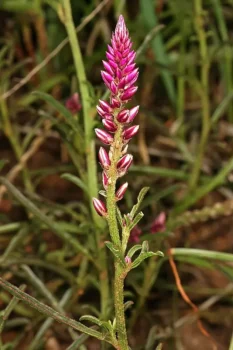
Guineaflower: The Mystery Plant That Might Leave You Puzzled
Ever stumble across a plant name that sounds intriguing but leaves you scratching your head when you try to learn more about it? Meet guineaflower (Hermbstaedtia odorata), a perennial forb that’s about as mysterious as plants get in the gardening world.
What We Know About Guineaflower
Hermbstaedtia odorata belongs to that curious category of plants that exist in botanical records but seem to have flown under the radar of most gardeners and even many plant experts. Here’s what we can tell you for certain:
- It’s a perennial forb (that’s botanist-speak for a non-woody herbaceous plant)
- It’s non-native to the United States but has been found growing in Maryland
- It has at least one botanical synonym: Hermbstaedtia elegans
- Like other forbs, it lacks significant woody tissue and has its growing points at or below ground level
The Geographic Mystery
Currently, guineaflower has only been documented in Maryland within the United States. This limited distribution could mean several things: it might be genuinely rare, it could be overlooked and misidentified, or it might simply not be well-established in North American gardens and wild spaces.
- Species observed
- No observations
The Information Gap Challenge
Here’s where things get tricky for curious gardeners. Despite its intriguing common name, reliable information about guineaflower’s growing requirements, appearance, and garden performance is surprisingly scarce. We don’t have clear details about:
- What it actually looks like when mature
- Its preferred growing conditions
- How tall or wide it grows
- Whether it offers benefits to pollinators or wildlife
- Its hardiness zones or care requirements
Should You Grow Guineaflower?
This is where responsible gardening practices come into play. Since guineaflower is non-native and we don’t have information about its potential invasiveness, it falls into that proceed with caution category. While it hasn’t been flagged as invasive or noxious, the lack of information makes it difficult to recommend.
If you’re set on adding something unique to your garden, consider these approaches:
- Research native alternatives that might offer similar appeal
- Connect with local botanical gardens or extension services for guidance
- Consider well-documented non-native plants with known garden behavior
The Native Alternative Route
Since reliable information about guineaflower is limited, why not explore native perennial forbs that are well-understood and beneficial to local ecosystems? Your local native plant society can point you toward beautiful native options that will thrive in your area while supporting local wildlife.
The Bottom Line
Guineaflower represents one of those botanical puzzles that reminds us how much we still don’t know about the plant world. While its mysterious nature might be appealing to plant collectors, most gardeners will find better success and ecological benefits by choosing well-documented native species.
Sometimes the most responsible gardening choice is admitting when we don’t have enough information to make a good recommendation – and guineaflower is definitely one of those cases!