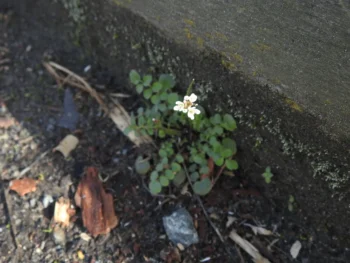
Hairy Bittercress: The Tiny Spring Visitor in Your Garden
If you’ve ever noticed tiny white flowers popping up in your garden beds in early spring, you’ve likely met hairy bittercress (Cardamine hirsuta). This petite annual herb has a knack for appearing seemingly out of nowhere, often before most gardeners have even thought about spring planting. While it might look delicate and harmless, this little plant has quite the story to tell.
What Is Hairy Bittercress?
Hairy bittercress is a small annual forb, meaning it’s an herbaceous plant that completes its entire life cycle in one growing season. Despite its common name, you might be surprised to learn that this plant isn’t actually native to North America. Originally from Europe, Asia, and North Africa, it has made itself quite at home across the continent, establishing populations from coast to coast.
As a non-native species, hairy bittercress has successfully introduced itself and now reproduces spontaneously throughout Canada and the United States without any human assistance. You can find it growing in an impressive range of locations, from Alabama to British Columbia, and from Hawaii to Quebec.
- Species observed
- No observations
Identifying Hairy Bittercress
This diminutive plant forms small rosettes close to the ground, typically reaching only a few inches in height. The delicate white flowers appear in small clusters and bloom very early in the spring, often when many native plants are still dormant. The plant gets its hairy name from the fine hairs found on its leaves and stems, though you might need to look closely to spot them.
Where Does It Grow?
Hairy bittercress is quite adaptable when it comes to moisture conditions. Across most regions, it has a facultative upland status, meaning it usually prefers non-wetland areas but can tolerate some moisture. In the Great Plains, it’s even more flexible, equally comfortable in wet and dry conditions. However, in Hawaii, it strongly prefers dry upland areas.
This adaptability helps explain why you might find it in various spots around your garden, from well-drained flower beds to slightly moist areas near downspouts.
Should You Grow Hairy Bittercress?
While hairy bittercress isn’t considered invasive or particularly problematic, it’s worth considering whether you want to encourage it in your garden. As a non-native annual, it doesn’t provide the same ecological benefits as native plants that have co-evolved with local wildlife and pollinators.
Growing Conditions and Care
If hairy bittercress has already established itself in your garden, here’s what you can expect:
- Hardiness: Thrives in USDA zones 3-9
- Light: Tolerates partial shade to full sun
- Soil: Prefers moist, well-drained conditions but is quite adaptable
- Maintenance: Requires virtually no care once established
- Self-seeding: Readily self-sows and can spread throughout garden areas
Native Alternatives to Consider
If you’re looking for early spring bloomers with similar delicate appeal, consider these native alternatives that will provide better support for local ecosystems:
- Spring beauty (Claytonia virginica) – early spring bloomer with pink-white flowers
- Toothwort species (Dentaria spp.) – closely related native plants with similar growth habits
- Wild ginger (Asarum canadense) – low-growing native ground cover
- Bloodroot (Sanguinaria canadensis) – early spring native with white flowers
The Bottom Line
Hairy bittercress is one of those plants that tends to show up whether you invite it or not. While it’s not harmful to your garden, choosing native alternatives will better support local wildlife and create more resilient garden ecosystems. If you do find yourself with hairy bittercress, you can simply enjoy its early spring blooms while gradually introducing native plants that will provide similar aesthetic appeal with greater ecological benefits.
Remember, the best gardens are those that work in harmony with local ecosystems, and native plants are your best allies in creating these thriving, sustainable spaces.