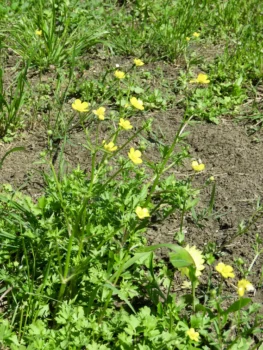
Hairy Buttercup: A Cheerful Non-Native Wildflower for Your Garden
If you’ve ever wandered through a field in spring and noticed small, bright yellow flowers dotting the landscape, you might have encountered hairy buttercup (Ranunculus sardous). This charming little wildflower has made itself quite at home across much of North America, despite its European origins.
What is Hairy Buttercup?
Hairy buttercup is a non-native forb that belongs to the buttercup family. As its name suggests, this plant has a distinctly hairy or fuzzy appearance, which helps distinguish it from other buttercup species. It’s a versatile little plant that can be annual, biennial, or perennial depending on growing conditions, making it quite adaptable to different environments.
You might also see this plant listed under its synonym, Ranunculus parvulus, in older gardening references.
Where Does Hairy Buttercup Grow?
Originally from Europe and the Mediterranean region, hairy buttercup has established itself across a wide swath of North America. You can find it growing in Alabama, Arkansas, California, Delaware, Florida, Georgia, Illinois, Indiana, Kansas, Kentucky, Louisiana, Maryland, Mississippi, Missouri, New Jersey, New York, North Carolina, Oklahoma, Oregon, Pennsylvania, South Carolina, Tennessee, Texas, Virginia, Washington, West Virginia, as well as British Columbia and New Brunswick in Canada.
- Species observed
- No observations
What Does Hairy Buttercup Look Like?
This low-growing wildflower produces cheerful, bright yellow flowers that are typically about half an inch across. Each flower has five glossy petals that seem to glow in the sunlight – that classic buttercup shine we all remember from childhood. The plant itself stays relatively small and close to the ground, making it perfect for filling in gaps in garden beds or naturalizing in meadow areas.
The hairy part of its name comes from the fine, soft hairs that cover the stems and leaves, giving the entire plant a slightly fuzzy texture.
Growing Conditions and Care
One of the reasons hairy buttercup has spread so successfully is its easy-going nature. This adaptable plant can handle:
- Full sun to partial shade conditions
- Various soil types, from clay to sandy soils
- Moist to moderately dry conditions
- USDA hardiness zones 3-9
The plant’s wetland status varies by region, but it generally falls into the facultative category, meaning it’s equally happy in wet or dry locations. In the Arid West, it leans more toward wetland areas, while in other regions it’s truly adaptable to both conditions.
Benefits for Pollinators and Wildlife
Those bright yellow blooms aren’t just pretty – they’re also valuable nectar sources for various small pollinators, including native bees and beneficial flies. The flowers bloom in spring and early summer, providing food during a crucial time for pollinator activity.
Should You Plant Hairy Buttercup?
While hairy buttercup isn’t invasive or problematic, it’s worth considering native alternatives that provide similar benefits while supporting local ecosystems more directly. If you’re drawn to the bright yellow, low-growing buttercup look, consider these native options instead:
- Swamp buttercup (Ranunculus septentrionalis) – native to eastern North America
- Early buttercup (Ranunculus fascicularis) – native to central and eastern regions
- Other native Ranunculus species specific to your region
That said, if hairy buttercup has already naturalized in your area or you’re looking for a low-maintenance ground cover for disturbed soil, it can serve a useful purpose in informal garden settings.
Planting and Care Tips
If you decide to include hairy buttercup in your landscape, here’s what you need to know:
- Seeds germinate easily in spring when soil temperatures warm
- Plant in areas where self-seeding won’t be problematic
- Minimal care required once established
- Tolerates foot traffic reasonably well
- May go dormant in hot, dry summer conditions
The Bottom Line
Hairy buttercup is one of those plants that proves sometimes the simplest flowers bring the most joy. While it may not be native to North America, it’s not causing ecological harm and can serve as a cheerful addition to naturalized areas and informal gardens. Just remember to consider native alternatives first – your local pollinators and ecosystem will thank you for it!
Whether you’re dealing with existing hairy buttercup in your landscape or considering adding some buttercup charm to your garden, this adaptable little wildflower offers an easy way to add bright color to those tricky spots where other plants struggle to thrive.