Hairy Cat’s Ear: The Dandelion Look-Alike That’s Taking Over North American Lawns
If you’ve ever looked at your lawn and wondered about those yellow flowers that look almost like dandelions but somehow seem different, you might be looking at hairy cat’s ear (Hypochaeris radicata). This European import has made itself quite at home across North America, and whether you love it or loathe it probably depends on your gardening philosophy.
What Exactly Is Hairy Cat’s Ear?
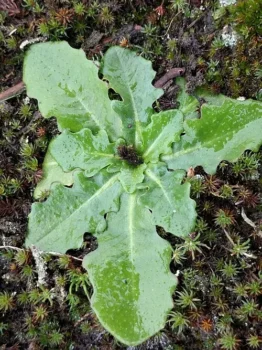
Hairy cat’s ear, also known as hairy catsear, is a perennial forb that belongs to the same family as dandelions. Like its more famous cousin, it’s a low-growing plant that forms rosettes of leaves at ground level and sends up bright yellow flower heads on slender stems. The key difference? Those stems are usually branched and completely leafless, unlike dandelions which typically have single stems with leaves.
This hardy little plant is what botanists call a forb – essentially an herbaceous flowering plant that doesn’t develop significant woody tissue. It’s built for survival, with a deep taproot that can extend well into the soil.
Where You’ll Find It Growing
Originally from Europe and North Africa, hairy cat’s ear has become a naturalized resident across an impressive range of North American locations. You can find it growing in Alabama, Alaska, Arkansas, California, Colorado, Connecticut, Delaware, Florida, Georgia, Hawaii, Idaho, Illinois, Indiana, Kentucky, Louisiana, Maine, Maryland, Massachusetts, Michigan, Mississippi, Missouri, Montana, Nevada, New Hampshire, New Jersey, New Mexico, New York, North Carolina, Ohio, Oregon, Pennsylvania, Rhode Island, South Carolina, Tennessee, Texas, Utah, Vermont, Virginia, Washington, West Virginia, and Wisconsin. It’s also established in several Canadian provinces including British Columbia, New Brunswick, Nova Scotia, Ontario, Quebec, Saskatchewan, Labrador, and Newfoundland, as well as the District of Columbia and St. Pierre and Miquelon.
- Species observed
- No observations
This widespread distribution tells us something important: hairy cat’s ear is extremely adaptable and reproduces readily without human intervention.
Growing Conditions and Hardiness
One reason for hairy cat’s ear’s success is its adaptability to different environments. The plant thrives in USDA hardiness zones 3-10, making it suitable for most North American climates. Its wetland status varies by region, but generally, it prefers upland conditions – meaning it usually grows in areas that aren’t consistently wet.
This species is particularly fond of:
- Disturbed soils and open areas
- Full sun to partial shade locations
- Well-drained soils, though it can tolerate various soil types
- Areas with minimal competition from other plants
Should You Grow Hairy Cat’s Ear?
Here’s where things get interesting. While hairy cat’s ear isn’t officially classified as invasive or noxious in most areas, it’s rarely something gardeners intentionally plant. It tends to show up on its own, often in lawns, meadows, and disturbed areas.
The plant does offer some benefits:
- Attracts pollinators like bees with its bright yellow flowers
- Extremely low maintenance once established
- Drought tolerant
- Blooms for extended periods
However, most gardeners consider it more of a weed than a desirable garden plant. Its aggressive spreading habit and ability to compete with turfgrass make it unpopular with lawn enthusiasts.
Native Alternatives to Consider
If you’re attracted to the yellow, daisy-like flowers and low-growing habit of hairy cat’s ear, consider these native alternatives that offer similar appeal without the weedy behavior:
- Native sunflowers (Helianthus species)
- Black-eyed Susan (Rudbeckia species)
- Lanceleaf coreopsis (Coreopsis lanceolata)
- Wild bergamot (Monarda species)
These natives will provide similar pollinator benefits while supporting local ecosystems more effectively.
Managing Hairy Cat’s Ear in Your Landscape
If hairy cat’s ear has already established itself in your garden, you have a few options. For small populations, hand-pulling when the soil is moist can be effective, but make sure to get the entire taproot. For larger infestations, improving soil conditions and establishing competitive plantings of desirable species can help crowd it out over time.
Remember, this plant reproduces by seed, so removing flower heads before they go to seed can help prevent further spread.
The Bottom Line
Hairy cat’s ear is a testament to plant adaptability and survival. While it’s not going to win any Gardener’s Choice awards, understanding this common species helps you make informed decisions about your landscape management. Whether you choose to tolerate it, manage it, or replace it with native alternatives depends entirely on your gardening goals and aesthetic preferences.
The key is knowing what you’re dealing with – and now you do!