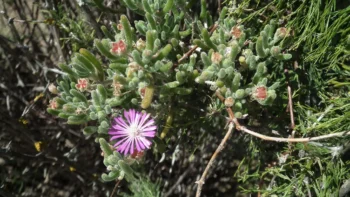
Hairy Dewflower: A Colorful Ground Cover for Warm Climate Gardens
Looking for a low-maintenance ground cover that produces cheerful blooms? Meet the hairy dewflower (Drosanthemum hispidum), a compact succulent that might just be the splash of color your drought-tolerant garden needs. This little charmer brings bright pink to magenta flowers and interesting textured foliage to sunny spots where other plants might struggle.
What Is Hairy Dewflower?
Hairy dewflower is a perennial succulent shrub that stays refreshingly compact, typically growing under 1.5 feet tall and never exceeding 3 feet at maturity. True to its name, this plant features fleshy, hair-covered leaves that give it a distinctive fuzzy appearance. The real show-stopper, though, is its daisy-like flowers that open wide in full sun and politely close up when clouds roll in or nighttime arrives.
Native Status and Distribution
Originally hailing from the Western and Eastern Cape provinces of South Africa, hairy dewflower is a non-native species that has established itself in California’s Mediterranean-like climate. It reproduces on its own in the wild and has shown it can persist without human intervention in suitable conditions.
- Species observed
- No observations
Why Consider (or Skip) This Plant?
Hairy dewflower offers several appealing qualities for the right garden situation:
- Extremely drought tolerant once established
- Produces vibrant flowers that attract bees and small pollinators
- Requires minimal care and maintenance
- Excellent for erosion control on slopes
- Thrives in poor soils where other plants struggle
However, since it’s not native to North America, you might want to consider native alternatives that provide similar benefits while supporting local ecosystems. Native options like creeping phlox, wild strawberry, or regional sedums can offer comparable ground cover benefits with added ecological value.
Garden Design and Landscape Use
This compact grower shines in several landscape roles. Use it as a colorful ground cover in Mediterranean-style gardens, tuck it into rock gardens where its interesting texture adds visual appeal, or incorporate it into succulent collections. It’s particularly valuable for coastal gardens where salt tolerance matters, and it excels at stabilizing slopes prone to erosion.
The plant works beautifully in drought-tolerant landscapes where water conservation is a priority. Its low, spreading habit makes it perfect for filling spaces between larger plants or cascading over retaining walls.
Growing Conditions and Care
Hairy dewflower is refreshingly easy to please, but it does have some specific preferences:
- Sunlight: Full sun is essential for best flowering
- Soil: Well-draining soil is crucial; it tolerates poor to moderately fertile conditions
- Water: Drought tolerant once established; water sparingly and avoid overwatering
- Climate: Hardy in USDA zones 9-11; not frost tolerant
Planting and Maintenance Tips
Spring is the ideal time to plant hairy dewflower. Choose a sunny location with excellent drainage – this plant absolutely despises wet feet. Once planted, water occasionally until established, then step back and let nature take over.
Maintenance is wonderfully minimal. A light pruning after the main flowering period helps maintain shape and may encourage additional blooms. In areas that experience any frost, consider container growing so you can provide winter protection, or treat it as an annual.
The biggest mistake gardeners make with this plant? Overwatering. When in doubt, err on the dry side – your hairy dewflower will thank you with better growth and more abundant flowers.
The Bottom Line
Hairy dewflower can be a delightful addition to warm climate gardens, especially where water conservation and low maintenance are priorities. While it’s not native, it’s not considered invasive either, making it a reasonable choice for the right situation. Just remember to consider native alternatives first – they’ll provide similar benefits while supporting local wildlife and ecosystems even better.