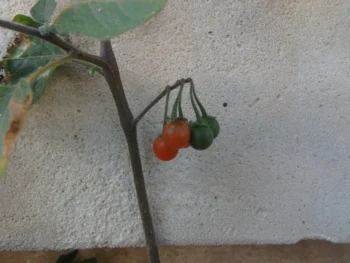
Hairy Nightshade: A Quirky Non-Native with Orange Berries
Meet hairy nightshade (Solanum villosum), a curious little plant that’s been quietly making itself at home across several U.S. states. This non-native member of the nightshade family brings a touch of European charm to American gardens, though it comes with some considerations worth exploring.
What Exactly Is Hairy Nightshade?
Hairy nightshade is a forb herb—basically a soft-stemmed plant without woody tissue that dies back to the ground each year. Despite its somewhat intimidating family name, this particular nightshade is more curious than concerning. The plant can behave as either an annual or perennial depending on growing conditions, giving it flexibility in various climates.
You might also encounter this plant under several scientific synonyms, including Solanum alatum, Solanum luteum, or Solanum nigrum var. villosum, which can make identification a bit tricky for plant enthusiasts.
Where You’ll Find It Growing Wild
This European native has established itself in seven U.S. states: California, Florida, Maine, Massachusetts, New Hampshire, New Jersey, and Pennsylvania. It’s considered an introduced species that reproduces spontaneously in the wild, meaning it’s quite capable of taking care of itself once it gets going.
- Species observed
- No observations
The Look and Appeal
Hairy nightshade won’t win any showstopper of the year awards, but it has its own subtle charm. The plant produces small white flowers that give way to distinctive orange-yellow berries—quite different from the dark berries of its more famous (and infamous) nightshade relatives. Its compact, bushy growth habit makes it an interesting addition to wild gardens or naturalized areas.
Garden Role and Landscape Fit
This plant works best in:
- Wild or naturalized garden areas
- Herb gardens (for botanical interest rather than culinary use)
- Areas where you want low-maintenance, self-seeding plants
- Spaces that benefit from plants with interesting berries
Growing Conditions and Care
One of hairy nightshade’s best qualities is its easygoing nature. It thrives in full sun to partial shade and isn’t particularly fussy about soil quality—in fact, it tolerates poor soils quite well. The plant generally grows well in USDA hardiness zones 4-9, making it suitable for a wide range of climates.
Care requirements are minimal:
- Plant in well-drained soil
- Water occasionally during establishment
- Expect self-seeding in favorable conditions
- Little to no fertilizing needed
Benefits to Pollinators and Wildlife
The small white flowers do attract various pollinators, particularly smaller bees and flies. While not a pollinator powerhouse, every little bit helps in creating a diverse ecosystem in your garden.
Should You Plant It?
Here’s where things get interesting. Hairy nightshade isn’t invasive or noxious, so there’s no ecological alarm bell ringing. However, as a non-native species, it’s worth considering whether native alternatives might better serve your garden’s ecosystem.
If you’re drawn to plants with interesting berries, consider native alternatives like elderberry (Sambucus canadensis), spicebush (Lindera benzoin), or native viburnums. These provide similar visual interest while supporting local wildlife more effectively.
That said, if you already have hairy nightshade in your garden or you’re particularly drawn to this European curiosity, it can coexist peacefully with native plants in a mixed garden setting.
The Bottom Line
Hairy nightshade is one of those neutral plants—not particularly harmful, but not especially beneficial to local ecosystems either. It’s easy to grow, has some ornamental value, and won’t cause ecological havoc. Whether you choose to include it in your garden depends on your personal gardening philosophy and whether you prioritize native species or enjoy collecting interesting plants from around the world.
If you do decide to grow it, you’ll find it to be a low-maintenance addition that adds a touch of old-world botanical history to your landscape.