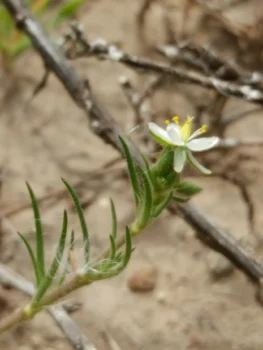
Hairy Sandspurry: A Mediterranean Ground Cover for Coastal Gardens
Looking for a tough, low-maintenance ground cover that can handle sandy soils and salty conditions? Meet hairy sandspurry (Spergularia villosa), a resilient little perennial that’s been quietly making itself at home along the West Coast. While it might not be a native plant, this unassuming forb has some interesting qualities that might catch your gardening eye.
What is Hairy Sandspurry?
Hairy sandspurry is a low-growing perennial forb – that’s garden-speak for a non-woody plant that comes back year after year. Don’t let the hairy part put you off; it simply refers to the fine, soft texture of its needle-like leaves. You might also see it listed under its synonyms Spergularia clevelandii or Tissa clevelandii in older gardening references.
This Mediterranean native has established itself as a naturalized resident in California and Oregon, where it reproduces on its own without any help from gardeners. It’s part of the carnation family, though you’d never guess it from its modest appearance!
- Species observed
- No observations
Garden Appeal and Characteristics
Hairy sandspurry won’t win any showiest flower contests, but it has a quiet charm that grows on you. Here’s what you can expect:
- Small white to pale pink flowers that appear in clusters
- Fine, needle-like leaves that create a delicate texture
- Low, mat-forming growth habit that hugs the ground
- Typically grows 2-6 inches tall with a spreading habit
- Blooms from spring through fall in favorable conditions
Where Does Hairy Sandspurry Fit in Your Garden?
This little ground cover shines in specific garden situations:
- Rock gardens: Its low profile and drought tolerance make it perfect for tucking between stones
- Coastal landscapes: Salt tolerance means it can handle ocean spray
- Mediterranean-style gardens: Fits right in with other drought-adapted plants
- Problem areas: Great for sandy, poor soils where other plants struggle
Growing Conditions and Care
One of hairy sandspurry’s best features is how easy it is to please. This plant thrives in conditions that would stress out more finicky species:
- Soil: Well-draining sandy or gravelly soils (essential!)
- Sun exposure: Full sun to light shade
- Water needs: Drought tolerant once established; actually prefers drier conditions
- USDA Zones: Hardy in zones 8-10
- Maintenance: Practically none – just avoid overwatering
Planting and Care Tips
Getting hairy sandspurry established is refreshingly straightforward:
- Plant in spring after the last frost
- Ensure excellent drainage – this plant absolutely cannot tolerate soggy conditions
- Space plants 6-12 inches apart for ground cover effect
- Water lightly until established, then reduce to minimal supplemental watering
- No fertilizer needed – it actually prefers lean soils
- Deadheading isn’t necessary, but you can trim back if it gets too enthusiastic
Wildlife and Pollinator Benefits
While hairy sandspurry’s flowers are small, they do attract some beneficial insects, particularly small native bees and flies. The dense mat it forms can also provide cover for small ground-dwelling creatures.
Should You Plant Hairy Sandspurry?
Here’s the balanced take: hairy sandspurry is a non-native plant that has naturalized in California and Oregon. While it’s not currently listed as invasive or noxious, it’s worth considering native alternatives first, especially if you’re committed to supporting local ecosystems.
That said, if you have a challenging spot with sandy soil, salt exposure, or drought conditions where natives are struggling, hairy sandspurry could be a practical solution. It’s particularly useful in coastal areas where the growing conditions are tough.
Native Alternatives to Consider
If you’d prefer to stick with native plants, consider these West Coast alternatives:
- Beach strawberry (Fragaria chiloensis) for coastal areas
- Sea thrift (Armeria maritima) for similar flower appeal
- Various native sedums for rock gardens
- Native buckwheats (Eriogonum species) for drought tolerance
The Bottom Line
Hairy sandspurry is a reliable, low-maintenance ground cover that excels in challenging conditions. While it’s not native to North America, it’s also not causing ecological havoc. If you have a spot where natives aren’t thriving and you need something bulletproof, this Mediterranean transplant might just fit the bill. Just remember to give it the well-draining conditions it craves, and it’ll reward you with years of quiet, dependable coverage.