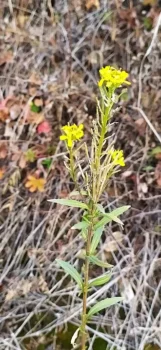
Hard Wallflower: A Lesser-Known Non-Native Wildflower
Meet the hard wallflower (Erysimum marschallianum), a somewhat mysterious member of the mustard family that has quietly made its home in a few scattered locations across the United States. While this little-known plant might not be the star of your garden show, it’s worth understanding what makes it tick—and whether it deserves a spot in your landscape.
What Exactly Is Hard Wallflower?
Hard wallflower is a non-native herbaceous plant that falls into the category botanists call forbs—basically, it’s a flowering plant without woody stems above ground. Think of it as the botanical equivalent of that friend who’s flexible about their living arrangements: it can live as either a biennial (completing its life cycle over two years) or a perennial (sticking around for multiple years).
This adaptable little plant has established itself as a naturalized species in the wild, meaning it reproduces and persists without human intervention. You might also encounter it under its scientific synonyms, including Erysimum durum.
Where You’ll Find It
Hard wallflower has a rather limited presence in the United States, having established populations in just three states: Iowa, Vermont, and Wisconsin. It’s quite the geographic puzzle—these scattered locations suggest the plant has very specific habitat requirements or perhaps arrived through different introduction pathways.
- Species observed
- No observations
Should You Plant Hard Wallflower?
Here’s where things get a bit tricky. While hard wallflower isn’t listed as invasive or noxious, it is a non-native species. This means it doesn’t provide the same ecological benefits as plants that co-evolved with local wildlife and ecosystems.
If you’re drawn to wallflowers for your garden, consider these native alternatives instead:
- Wild columbine (Aquilegia canadensis) for early spring color
- Wild bergamot (Monarda fistulosa) for pollinator support
- Purple coneflower (Echinacea purpurea) for long-lasting blooms
- Local native mustard family members in your region
The Information Gap
One of the most honest things we can say about hard wallflower is that there’s still a lot we don’t know about it. Details about its specific growing conditions, pollinator relationships, wildlife benefits, and garden performance are surprisingly scarce in botanical literature. This lack of information makes it challenging to provide specific cultivation advice or fully understand its ecological impact.
What we do know is that as a member of the mustard family (Brassicaceae), it likely shares some characteristics with its better-known relatives—potentially producing small, four-petaled flowers and having a preference for well-drained soils.
A Better Path Forward
Rather than taking a gamble on hard wallflower with its unknown characteristics and non-native status, why not explore the wonderful world of native plants? Your local native plant society, extension office, or reputable native plant nursery can help you discover indigenous species that will thrive in your specific conditions while supporting local ecosystems.
Native plants offer predictable growing requirements, proven wildlife benefits, and the satisfaction of knowing you’re creating habitat that truly belongs in your landscape. Plus, you’ll have access to detailed growing information and a community of gardeners who can share their experiences.
The Bottom Line
Hard wallflower remains something of an enigma in the plant world—present but not prominent, established but not well-studied. While there’s nothing inherently wrong with this quiet little forb, there are so many spectacular native alternatives that offer greater benefits for both gardeners and local ecosystems.
Sometimes the best gardening advice is knowing when to say thanks, but no thanks to one plant in favor of discovering something even better. In the case of hard wallflower, that something better is likely growing wild in a natural area near you, just waiting to be invited into your garden.