Hare’s Ear Mustard: An Uninvited Garden Guest Worth Understanding
If you’ve spotted a tall, slender plant with small yellow flowers popping up uninvited in your garden or along roadsides, you might have encountered hare’s ear mustard (Conringia orientalis). This annual herb has quite the travel story – it journeyed from Europe and western Asia to become a common sight across North America, though it’s definitely not on anyone’s most wanted garden plant list.
What Exactly Is Hare’s Ear Mustard?
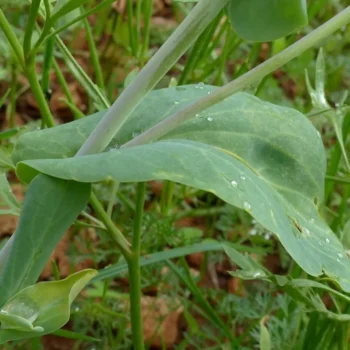
Hare’s ear mustard is a member of the mustard family (Brassicaceae) and goes by the scientific name Conringia orientalis, though you might also see it listed as Brassica orientalis in older references. This annual forb – basically a non-woody herbaceous plant – has earned its common name from its distinctive ear-shaped leaves that clasp around the stem.
As a non-native species, hare’s ear mustard has made itself quite at home across an impressive range of North American territories. You’ll find it growing wild in every U.S. state from Alabama to Wyoming, plus it’s established itself throughout Canadian provinces from British Columbia to Newfoundland, and even made it to Alaska and St. Pierre and Miquelon.
- Species observed
- No observations
Recognizing Hare’s Ear Mustard
This plant is pretty easy to spot once you know what to look for:
- Height: Typically grows 2-4 feet tall
- Flowers: Small, pale yellow flowers arranged in clusters at the top of stems
- Leaves: The signature hare’s ear shaped leaves that wrap around the stem
- Growth pattern: Single upright stem with a somewhat sparse, lanky appearance
- Timing: Blooms in late spring to early summer
Should You Plant Hare’s Ear Mustard?
Here’s the thing – most gardeners don’t intentionally plant hare’s ear mustard, and there are good reasons for that. While it’s not officially classified as invasive in our data, this plant tends to show up on its own and can spread readily in disturbed soils. It’s more of a volunteer that appears in gardens, vacant lots, and along roadsides rather than a cultivated ornamental.
The plant does offer some benefits – its flowers can attract small pollinators, and it’s quite drought tolerant once established. However, its weedy appearance and tendency to self-seed make it less than ideal for most landscaping purposes.
Growing Conditions and Care
If hare’s ear mustard has appeared in your garden (which is more likely than you planting it intentionally), here’s what it prefers:
- Sunlight: Full sun
- Soil: Tolerates poor, disturbed soils well
- Water: Drought tolerant once established
- USDA Zones: Adaptable to zones 3-9 due to its annual nature
- Maintenance: Essentially none – it’s quite self-sufficient
Better Native Alternatives
If you’re interested in mustard family plants for your garden, consider these native alternatives that offer similar yellow flowers but with better ecological benefits:
- Wild mustard species native to your region
- Native evening primrose varieties
- Regional wildflower mixes that include native Brassicaceae species
The Bottom Line
Hare’s ear mustard is one of those plants that’s interesting to understand but not necessarily something to encourage in your garden. If it shows up, you’ll know what it is, and you can decide whether to let it stay for its modest pollinator benefits or remove it to make room for more desirable native species. Either way, understanding the plants that volunteer in our spaces helps us become better gardeners and stewards of our local ecosystems.