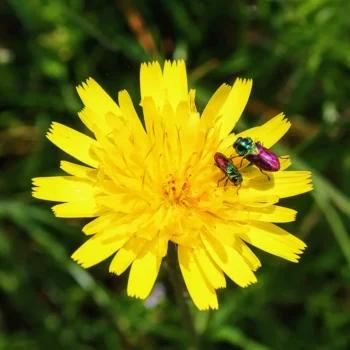
Hawkbit: A Hardy Non-Native Wildflower for Low-Maintenance Gardens
If you’ve ever spotted cheerful yellow flowers that look suspiciously like miniature dandelions dotting lawns and meadows, you’ve likely encountered hawkbit (Leontodon). This European native has made itself quite at home across North America, and while it’s not originally from these parts, it’s become a familiar sight in many landscapes.
What Exactly is Hawkbit?
Hawkbit is a forb – essentially a non-woody flowering plant that forms low rosettes of deeply lobed leaves. Unlike its woody cousins, hawkbit lacks significant woody tissue and keeps its growing points right at or below ground level, which helps it survive harsh winters and dry spells.
This adaptable little plant can behave as an annual, biennial, or perennial depending on growing conditions, making it quite the shape-shifter in the plant world. Its bright yellow, dandelion-like flowers appear on slender stems from spring through fall, providing a long season of cheerful blooms.
Where You’ll Find Hawkbit
Originally from Europe and Asia, hawkbit has established itself as a non-native species across an impressive range of North American locations. You can find it thriving everywhere from Alabama to Alaska, and from British Columbia to Newfoundland. It’s also made its way to Hawaii and even remote locations like Greenland and St. Pierre and Miquelon.
- Species observed
- No observations
Should You Grow Hawkbit in Your Garden?
Here’s where things get interesting. Hawkbit isn’t native to North America, but it’s also not classified as invasive or noxious in most areas. This puts it in a bit of a gray zone for native plant enthusiasts. Here are some factors to consider:
Reasons You Might Want Hawkbit:
- Extremely low maintenance once established
- Provides early season nectar for pollinators when few other flowers are blooming
- Tolerates poor soils and drought conditions
- Long blooming season from spring through fall
- Self-seeds readily to fill bare spots
Reasons to Think Twice:
- Not native to North America, so it doesn’t support native wildlife as effectively as indigenous plants
- Can spread aggressively via wind-dispersed seeds
- May outcompete native wildflowers in some situations
Growing Conditions and Care
If you decide to include hawkbit in your landscape, you’ll find it refreshingly easy to please. This tough little plant thrives in full sun to partial shade and isn’t picky about soil quality. It actually prefers well-drained soils and becomes quite drought tolerant once established.
Hawkbit is hardy across USDA zones 3-9, making it suitable for most North American gardens. It’s particularly useful in naturalized areas, meadow gardens, or anywhere you want low-maintenance groundcover that provides consistent blooms.
Planting and Care Tips
The beauty of hawkbit lies in its simplicity. Here’s how to work with this undemanding plant:
- Seeds germinate easily in spring or fall
- Space plants about 6-12 inches apart if planting intentionally
- Water regularly during establishment, then reduce watering
- Deadhead flowers if you want to prevent self-seeding
- No fertilization necessary – hawkbit actually prefers lean soils
Consider Native Alternatives
While hawkbit can serve a purpose in low-maintenance landscapes, consider these native alternatives that offer similar benefits while supporting local ecosystems:
- Wild bergamot (Monarda fistulosa) for pollinator support
- Black-eyed Susan (Rudbeckia species) for yellow, daisy-like flowers
- Native asters for fall blooms and wildlife benefits
- Wild lupine (Lupinus perennis) for early season color
The Bottom Line
Hawkbit represents one of those garden dilemmas where practicality meets ecological consciousness. While it’s not native and won’t provide the same ecosystem benefits as indigenous plants, it’s also not aggressively invasive and can serve a role in challenging growing conditions where few other plants thrive.
If you’re dealing with poor soil, drought conditions, or simply want something that blooms reliably with zero fuss, hawkbit might earn a spot in your landscape. Just be mindful of its self-seeding tendencies and consider pairing it with native species to create a more ecologically valuable garden overall.