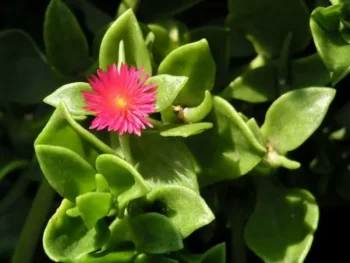
Heartleaf Iceplant: A Colorful Ground Cover with a Complex Story
If you’re looking for a low-maintenance ground cover that produces cheerful flowers and can handle tough growing conditions, you might have come across heartleaf iceplant (Aptenia cordifolia). This succulent spreader has caught the attention of many gardeners, but there’s more to this plant than meets the eye.
What Exactly Is Heartleaf Iceplant?
Heartleaf iceplant is a perennial succulent that belongs to the fig-marigold family. True to its common name, this plant produces small, heart-shaped leaves that are thick and fleshy – perfect adaptations for storing water. The iceplant part of the name comes from the way its leaves can appear to glisten in the sunlight, almost like they’re covered in tiny ice crystals.
This low-growing forb spreads along the ground, creating dense mats that rarely exceed 6 inches in height but can spread 2-3 feet wide. During blooming season, it’s covered in bright magenta-pink daisy-like flowers that really know how to put on a show.
Where You’ll Find It Growing
Here’s where things get interesting: heartleaf iceplant isn’t actually native to North America. This South African native has made itself at home in several U.S. states, including California, Florida, and Oregon. It’s what botanists call a naturalized species – meaning it reproduces on its own in the wild without human help.
- Species observed
- No observations
The Garden Appeal
So why do gardeners find this plant appealing? There are several compelling reasons:
- Incredibly drought tolerant once established
- Fast-growing ground cover that fills in bare spots quickly
- Produces abundant colorful flowers from spring through fall
- Requires minimal maintenance
- Excellent for erosion control on slopes
- Attracts bees and butterflies
Where It Thrives
Heartleaf iceplant is happiest in USDA hardiness zones 9-11, where it can grow year-round as a perennial. It has a facultative wetland status, meaning it’s adaptable to both wet and dry conditions, though it definitely prefers the drier side once established.
This plant is perfect for:
- Mediterranean-style gardens
- Xeriscaping projects
- Rock gardens
- Coastal landscapes
- Slopes needing erosion control
Growing Conditions and Care
If you decide to grow heartleaf iceplant, here’s what it needs to be happy:
Light: Full sun to partial shade, though it flowers best with plenty of sunshine
Soil: Well-draining soil is absolutely essential. This plant will quickly succumb to root rot in waterlogged conditions
Water: Water regularly during establishment, then reduce watering significantly. Once established, it’s quite drought tolerant
Maintenance: Very low maintenance. You might want to trim it back if it starts spreading beyond where you want it
A Word of Caution
While heartleaf iceplant can be a useful garden plant, it’s important to remember that it’s not native to North America. In ideal conditions, it can spread aggressively and potentially outcompete native plants. Some gardeners love its vigorous growth, while others find it becomes more enthusiastic than they bargained for.
Native Alternatives to Consider
If you’re interested in supporting local ecosystems, consider these native ground covers instead:
- Wild strawberry (Fragaria species) for similar spreading habit
- Creeping phlox (Phlox subulata) for colorful flowers
- Native sedums for succulent texture
- Regional native grasses for erosion control
The Bottom Line
Heartleaf iceplant can be a useful addition to water-wise gardens, especially in challenging growing conditions where few other plants thrive. Its cheerful flowers and easy-care nature make it appealing to many gardeners. However, as with any non-native plant, it’s worth considering whether native alternatives might better serve both your garden goals and local wildlife.
If you do choose to plant heartleaf iceplant, monitor its spread and be prepared to manage it if it gets too enthusiastic. And remember – sometimes the most beautiful gardens are those that work in harmony with the local ecosystem, so don’t overlook the native plants that have been thriving in your area for centuries!