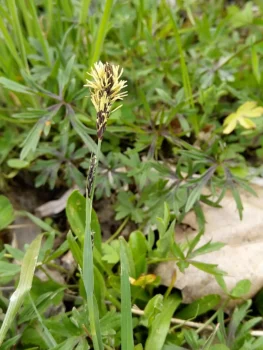
Heath Sedge: A Tough European Sedge for Challenging Garden Spots
Looking for a low-maintenance grass-like plant that can handle tough growing conditions? Heath sedge might just be the resilient perennial you’ve been searching for. This European native has quietly made itself at home in parts of North America, offering gardeners a hardy option for those tricky spots where other plants struggle.
What is Heath Sedge?
Heath sedge (Carex flacca) is a perennial sedge that belongs to the grass-like plant family. You might also see it listed under its botanical synonym, Carex glauca. This tough little plant originally hails from European coastal areas and heathlands, which explains its remarkable ability to tolerate harsh conditions that would make other plants throw in the towel.
Where Does Heath Sedge Grow?
As a non-native species, heath sedge has established itself in several regions across North America. You’ll find it growing wild in Nova Scotia, Ontario, Quebec, Michigan, and New York, where it reproduces on its own and has become naturalized in the landscape.
- Species observed
- No observations
Why Consider Heath Sedge for Your Garden?
Heath sedge brings several appealing qualities to the garden table:
- Attractive foliage: Blue-green to gray-green leaves create dense, attractive clumps
- Evergreen nature: Maintains its color through winter in milder climates
- Drought tolerance: Once established, it can handle dry conditions like a champ
- Low maintenance: Perfect for gardeners who prefer a plant it and forget it approach
- Erosion control: Excellent for slopes and areas prone to soil erosion
Garden Design and Landscape Uses
Heath sedge shines in several garden situations:
- Ground cover: Forms dense mats that suppress weeds naturally
- Coastal gardens: Its European seaside heritage makes it perfect for salt-tolerant plantings
- Rock gardens: Provides soft texture among hard stone elements
- Naturalized areas: Ideal for low-maintenance, wild-looking spaces
- Slope stabilization: Helps prevent soil erosion on hillsides
Growing Conditions and Care
One of heath sedge’s best features is its adaptability. This hardy perennial thrives in USDA zones 4-8 and isn’t particularly fussy about its living conditions:
- Sunlight: Full sun to partial shade
- Soil: Well-drained soils of various types
- Water: Drought tolerant once established, though regular water helps it look its best
- Maintenance: Cut back in late winter or early spring to refresh the foliage
Planting and Care Tips
Getting heath sedge established is refreshingly straightforward:
- Plant in spring or fall when temperatures are moderate
- Space plants 12-18 inches apart for ground cover effect
- Water regularly the first growing season to help establish roots
- Once established, it’s quite drought tolerant
- Be aware that it can spread via underground rhizomes, so give it room or plan for containment
- Annual spring cleanup involves cutting back old foliage to make way for fresh growth
Wildlife and Ecological Considerations
As a wind-pollinated sedge, heath sedge doesn’t offer significant direct benefits to pollinators like bees and butterflies. However, sedges can provide habitat and nesting material for various wildlife species.
Native Alternatives to Consider
While heath sedge can be a useful garden plant, you might also consider these native sedge alternatives that provide similar benefits while supporting local ecosystems:
- Pennsylvania sedge (Carex pensylvanica): Excellent native ground cover
- Buffalo grass sedge (Carex brevior): Great for naturalized areas
- Meadow sedge (Carex granularis): Thrives in moist to wet conditions
The Bottom Line
Heath sedge offers gardeners a reliable, low-maintenance option for challenging garden spots. While it’s not native to North America, it’s not considered invasive either, making it a reasonable choice for situations where you need a tough, adaptable ground cover. Just remember to consider native alternatives first, as they’ll provide better support for local wildlife and ecosystems. Whether you choose heath sedge or a native alternative, you’ll have a hardy, attractive addition to your landscape that won’t demand constant attention.