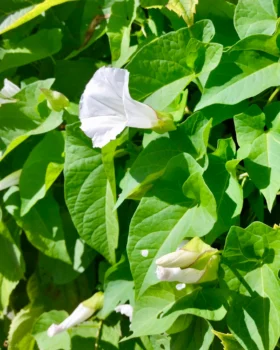
Hedge False Bindweed: A Beautiful but Problematic Garden Visitor
If you’ve ever encountered a vigorous climbing vine with pristine white trumpet flowers and heart-shaped leaves taking over a fence or garden bed, you might have met hedge false bindweed (Calystegia sepium sepium). While undeniably attractive, this perennial vine comes with some serious baggage that every gardener should know about.
What is Hedge False Bindweed?
Hedge false bindweed is a non-native perennial vine that originally hails from Europe and western Asia. This robust climber belongs to the morning glory family and shares many characteristics with its ornamental cousins, including those distinctive funnel-shaped white flowers that can reach up to 2 inches across.
You might also encounter this plant listed under its scientific synonyms, including Convolvulus sepium or Convolvulus nashii, as botanical names have shifted over time.
Where Does It Grow?
This adaptable vine has established itself across a wide swath of North America, currently found in 21 states spanning from Alaska down to Georgia and from coast to coast. It thrives in USDA hardiness zones 3-9, making it unfortunately well-suited to most temperate regions of the United States.
- Species observed
- No observations
The Problem with This Pretty Vine
Here’s where things get complicated. Despite its attractive appearance, hedge false bindweed is classified as a noxious weed in some areas, with prohibited seed status in certain regions. As a non-native species that reproduces spontaneously and persists without human intervention, it can quickly become problematic in natural areas and gardens alike.
This vigorous grower spreads both by seed and through underground rhizomes, allowing it to form dense colonies that can smother native vegetation and disrupt local ecosystems. Once established, it’s notoriously difficult to remove completely.
Why You Shouldn’t Plant It
While hedge false bindweed does offer some benefits – its flowers attract pollinators like bees, and it provides quick coverage for unsightly areas – the risks far outweigh these advantages. Here’s why most gardeners should avoid this plant:
- Aggressive spreading habit that’s difficult to control
- Can overwhelm and kill desirable garden plants
- Nearly impossible to eradicate once established
- Classified as noxious in some jurisdictions
- Competes with native plant communities
Native Alternatives to Consider
Instead of hedge false bindweed, consider these native climbing alternatives that offer similar aesthetic appeal without the invasive behavior:
- Wild cucumber (Echinocystis lobata) – fast-growing annual with white flowers
- Virgin’s bower (Clematis virginiana) – native clematis with fragrant white blooms
- American groundnut (Apios americana) – edible vine with fragrant purple flowers
- Wild grape species (Vitis riparia or V. labrusca) – provide food for wildlife
If You Already Have It
Found hedge false bindweed already established in your garden? Don’t panic, but do take action. Removal requires persistence and multiple approaches:
- Hand-pull small infestations, ensuring you get the entire root system
- Cut back growth repeatedly to weaken the root system
- Cover cleared areas with mulch to prevent re-sprouting
- Consider consulting with local extension services for management strategies
- Never compost plant material – dispose of it in municipal waste
The Bottom Line
While hedge false bindweed certainly has its charms – those pristine white flowers are genuinely lovely – it’s simply not worth the risk for most gardeners. The plant’s aggressive nature and potential to escape cultivation make it a poor choice for responsible gardening. Instead, invest your time and energy in native alternatives that will provide similar beauty while supporting local ecosystems and wildlife.
Remember, the most beautiful gardens are those that work in harmony with their surrounding environment, and that means choosing plants that play well with others rather than bullying their way to dominance.