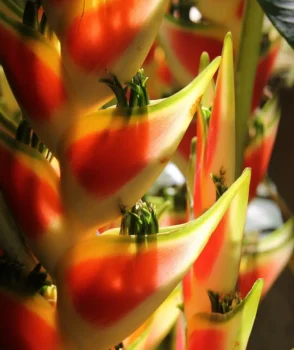
Heliconia wagneriana: A Striking Tropical Beauty for Warm Climate Gardens
If you’re dreaming of adding some serious tropical flair to your garden, Heliconia wagneriana might just catch your eye. This stunning plant, also known by its synonym Heliconia elongata, brings the lush beauty of Central and South American rainforests right to your backyard – assuming you live somewhere warm enough to keep it happy!
What Makes This Plant Special?
Heliconia wagneriana is like nature’s version of a living sculpture. Picture large, banana-like leaves that create dramatic backdrops, topped with eye-catching colorful bracts in vibrant reds and oranges with cheerful yellow tips. It’s the kind of plant that makes neighbors stop and stare, wondering if you’ve somehow transported a piece of the Amazon to your garden.
Where Does It Come From?
Originally from the tropical regions of Central and South America, this heliconia has made itself at home in various warm climates around the world. Currently, it’s established in Guam and Palau, where it reproduces naturally in the wild. While it’s not native to these Pacific locations, it has adapted well to these tropical environments.
- Species observed
- No observations
Is This Plant Right for Your Garden?
Before you fall head over heels for this tropical stunner, let’s talk about whether it’s a good match for your space and climate. Heliconia wagneriana is definitely not a plant for everyone – it has some very specific needs that might make or break your gardening relationship.
Climate Requirements
This beauty thrives only in USDA hardiness zones 10-12, which means it needs consistently warm, frost-free conditions year-round. If you live anywhere that sees temperatures below about 50°F regularly, you’ll need to think greenhouse or indoor cultivation.
Garden Style and Placement
Heliconia wagneriana works wonderfully as:
- A dramatic focal point in tropical-themed gardens
- Background screening with its large foliage
- An accent plant near pools or water features
- A greenhouse specimen in cooler climates
Growing Heliconia wagneriana Successfully
Ideal Growing Conditions
Think rainforest conditions, and you’ll be on the right track:
- Light: Partial shade to filtered sunlight – too much direct sun can scorch those beautiful leaves
- Soil: Rich, well-draining but consistently moist soil with plenty of organic matter
- Humidity: High humidity levels (think 60% or higher)
- Temperature: Warm temperatures between 70-85°F consistently
Planting and Care Tips
Getting your heliconia established and thriving requires attention to detail:
- Plant in spring when temperatures are consistently warm
- Keep soil consistently moist but not waterlogged
- Feed regularly with a balanced fertilizer during growing season
- Protect from strong winds that can tear the large leaves
- Remove dead or damaged leaves regularly
- Mulch around the base to retain moisture and suppress weeds
Wildlife and Pollinator Benefits
One of the most delightful aspects of growing Heliconia wagneriana is watching it come alive with wildlife activity. The colorful bracts are specifically designed to attract hummingbirds and other nectar-feeding birds, creating a natural bird-watching opportunity right in your garden. It’s like having a front-row seat to nature’s own air show!
Consider Native Alternatives
While Heliconia wagneriana can be a stunning addition to appropriate climates, consider exploring native tropical plants in your area first. Native species typically require less water and maintenance while providing better support for local wildlife populations. Check with your local native plant society or extension office for recommendations specific to your region.
The Bottom Line
Heliconia wagneriana is undeniably gorgeous and can create a spectacular tropical display in the right conditions. However, it’s definitely a high-maintenance relationship that requires warm temperatures, high humidity, and consistent care. If you have the right climate and are prepared for its needs, this plant can be a rewarding addition to your tropical garden paradise. Just remember to source it responsibly and always consider native alternatives that might offer similar beauty with less environmental impact.