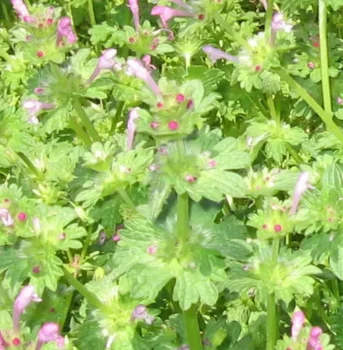
Henbit Deadnettle: The Early-Blooming Visitor in Your Garden
If you’ve noticed small purple flowers popping up in your garden beds or lawn in early spring, you’ve likely encountered henbit deadnettle (Lamium amplexicaule). This common annual herb is one of nature’s earliest bloomers, often appearing when winter barely loosens its grip. While not native to North America, this European transplant has made itself quite at home across the continent.
What Is Henbit Deadnettle?
Henbit deadnettle is an annual to biennial forb—basically a non-woody herbaceous plant that completes its life cycle in one to two years. Don’t let the name deadnettle worry you; it doesn’t sting like true nettles. The dead refers to its lack of stinging properties, while its square stems and hooded flowers reveal its membership in the mint family.
The plant gets its henbit common name from chickens’ fondness for pecking at its seeds and leaves. Its distinctive heart-shaped leaves clasp around square stems, creating a layered, almost architectural appearance that’s quite charming up close.
Where You’ll Find It
Originally from Europe and Asia, henbit deadnettle has spread extensively across North America. You can find it in nearly every U.S. state and most Canadian provinces, from Alberta to Newfoundland, and from Alaska to Hawaii. It thrives in disturbed soils, garden beds, lawns, roadsides, and agricultural areas.
- Species observed
- No observations
Recognizing Henbit Deadnettle
This low-growing plant typically reaches 4-12 inches tall and spreads in a mat-like formation. Key identifying features include:
- Heart-shaped or rounded leaves that wrap around the stem
- Small purple, pink, or occasionally white tubular flowers with hooded tops
- Square stems (characteristic of the mint family)
- Flowers clustered in whorls around the upper stems
- Early blooming period (often February through May)
Garden Role and Landscape Use
Henbit deadnettle fills an interesting niche in the garden ecosystem. As one of the earliest bloomers, it provides crucial nectar for bees, butterflies, and other pollinators emerging from winter dormancy. Its low-growing habit makes it useful as temporary ground cover in disturbed areas.
However, its enthusiastic self-seeding nature means it can quickly colonize bare soil and compete with desired plants. Some gardeners appreciate its early color and pollinator support, while others consider it a weedy nuisance.
Growing Conditions
One of henbit’s superpowers is its adaptability. This hardy plant grows well in USDA zones 3-10 and tolerates a wide range of conditions:
- Soil: Adapts to various soil types, prefers moist, well-drained conditions
- Light: Full sun to partial shade
- Water: Moderate moisture requirements
- pH: Tolerates various pH levels
Should You Plant Henbit Deadnettle?
Here’s the thing about henbit: you probably won’t need to plant it—it tends to find its way to gardens on its own! While not considered invasive, it’s an opportunistic self-seeder that can become quite established.
If you’re looking for early-season color and pollinator support, consider these native alternatives instead:
- Wild ginger (Asarum canadense) for shade
- Spring beauty (Claytonia virginica) for early flowers
- Violet species (Viola) for similar-sized spring blooms
- Wild bergamot (Monarda fistulosa) for mint family relatives
Managing Henbit in Your Garden
If henbit appears uninvited in your garden, you have several options:
- Embrace it: Enjoy the early flowers and pollinator activity, then remove it after blooming
- Control it: Hand-pull plants before they set seed (wear gloves as some people are sensitive to the sap)
- Mulch prevention: Apply thick mulch to prevent seeds from germinating
- Timing matters: Remove plants in late winter/early spring before flowering
The Bottom Line
Henbit deadnettle is one of those plants that gardeners either love for its early season charm or tolerate as a persistent visitor. While it provides valuable early nectar for pollinators, its non-native status and aggressive seeding make it less desirable than native alternatives. Whether you choose to welcome it or remove it depends on your gardening goals and tolerance for self-seeding annuals.
Remember, the best gardens often include a mix of planned and spontaneous elements—and henbit deadnettle definitely falls into the spontaneous category!