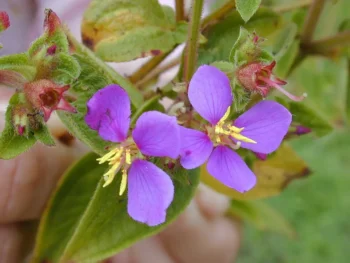
Herbaceous Glorytree: A Tropical Shrub for Hawaiian Gardens
Meet the herbaceous glorytree (Tibouchina herbacea), also known as cane tibouchina – a perennial shrub that has found its way into Hawaiian landscapes. While this South American native isn’t originally from the islands, it’s established itself as part of Hawaii’s diverse plant community. If you’re curious about this tropical beauty, let’s dive into what makes it tick and whether it deserves a spot in your garden.
What Exactly Is Herbaceous Glorytree?
Don’t let the name fool you – despite being called herbaceous, this glorytree is actually a woody shrub that typically grows less than 13-16 feet tall. It’s a multi-stemmed perennial that can develop several stems from near the ground, giving it that classic shrubby appearance we all know and love.
Originally from South America, Tibouchina herbacea has made Hawaii its adopted home, where it reproduces on its own and persists in the wild without any human help. It’s what botanists call a naturalized species – basically, it’s become a permanent resident of the islands.
Where You’ll Find It Growing
Currently, herbaceous glorytree is found growing in Hawaii, where it has adapted well to the tropical climate. The plant shows remarkable flexibility when it comes to moisture levels – it can handle both wetland and non-wetland conditions, earning it a facultative wetland status.
- Species observed
- No observations
Should You Plant Herbaceous Glorytree?
Here’s where things get interesting. While this plant isn’t considered invasive or problematic, it’s also not a Hawaii native. If you’re passionate about supporting local ecosystems and native wildlife, you might want to consider some fantastic native Hawaiian alternatives instead.
Native Hawaiian Alternatives to Consider
Before you fall head-over-heels for herbaceous glorytree, check out these gorgeous native Hawaiian options:
- ʻŌhiʻa lehua – Stunning red flowers that native birds absolutely adore
- Māmane – Bright yellow blooms that support endangered native insects
- Naupaka – Unique half-flowers with a fascinating Hawaiian legend attached
- ʻIlima – Hawaii’s official state flower with delicate orange blooms
If You Do Choose to Grow It
Should you decide to add herbaceous glorytree to your landscape, here’s what you should know about keeping it happy:
Growing Conditions
This tropical shrub thrives in Hawaii’s warm climate and is likely suited for USDA hardiness zones 9-11. Given its facultative wetland status, it’s pretty adaptable when it comes to water – it can handle both moist and drier conditions, though like most plants, it probably appreciates consistent moisture without being waterlogged.
Garden Role and Design Ideas
Herbaceous glorytree works well as an ornamental shrub in tropical and subtropical garden settings. Its multi-stemmed growth habit makes it suitable for:
- Creating natural-looking borders
- Adding structure to mixed plantings
- Providing mid-level height in layered landscapes
- Filling space in informal garden designs
Care and Maintenance
While specific care information for this species is limited, most Tibouchina family members appreciate:
- Well-draining soil that doesn’t stay soggy
- Regular watering during dry spells
- Occasional pruning to maintain shape
- Protection from strong winds if possible
The Bottom Line
Herbaceous glorytree is a perfectly pleasant shrub that’s found its niche in Hawaiian gardens. While it’s not harmful, choosing native Hawaiian plants will better support local wildlife and preserve the islands’ unique natural heritage. If you do grow it, enjoy its tropical charm – just remember to also make room for some native beauties that truly belong in paradise.
Whatever you choose, happy gardening in the beautiful Hawaiian islands!