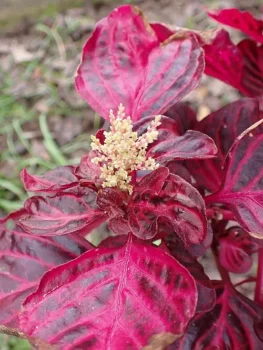
Herbst’s Bloodleaf: A Colorful Non-Native Addition to Your Garden
If you’re looking to add a splash of vibrant color to your garden or home, Herbst’s bloodleaf (Iresine herbstii) might catch your eye with its stunning red and purple foliage. This eye-catching annual has made its way from South America to gardens across warmer climates, bringing tropical flair wherever it grows.
What Is Herbst’s Bloodleaf?
Herbst’s bloodleaf is an annual forb – essentially an herbaceous plant without woody stems that lives for just one growing season. Originally from South America, this non-native species has established itself in Hawaii, Puerto Rico, and the U.S. Virgin Islands, where it reproduces naturally without human intervention.
The plant is primarily grown for its spectacular foliage rather than its flowers. The leaves display brilliant shades of red, purple, and sometimes yellow-green, creating a dramatic focal point in any planting scheme.
- Species observed
- No observations
Why Gardeners Choose Herbst’s Bloodleaf
There are several reasons why gardeners are drawn to this colorful plant:
- Stunning Visual Impact: The vibrant red-purple foliage creates instant drama in containers or garden beds
- Versatile Use: Works well as an accent plant, in mixed containers, or as a houseplant
- Easy Care: Relatively low-maintenance once established
- Fast Growing: Quickly fills in spaces and provides immediate color
Growing Conditions and Care
Herbst’s bloodleaf thrives in warm, tropical conditions and is best suited for USDA hardiness zones 10-11. In cooler climates, it’s often grown as an annual or brought indoors as a houseplant.
Optimal Growing Conditions:
- Bright, indirect light (too much direct sun can fade the foliage)
- Well-draining soil that retains some moisture
- Warm temperatures above 60°F
- Regular watering, keeping soil consistently moist but not waterlogged
- High humidity levels when possible
Planting and Care Tips
Getting the best from your Herbst’s bloodleaf is straightforward with these tips:
- Propagation: Easily grown from stem cuttings rooted in water or moist potting mix
- Maintenance: Pinch off any flowers that appear to keep the plant’s energy focused on producing colorful foliage
- Watering: Keep soil consistently moist but ensure good drainage to prevent root rot
- Fertilizing: Light, regular feeding with balanced fertilizer promotes healthy growth
- Winter Care: In cooler zones, bring containers indoors or treat as an annual
Garden Design and Landscape Role
Herbst’s bloodleaf works beautifully in tropical-themed gardens and makes an excellent container plant. Its compact, bushy growth habit and vibrant foliage make it perfect for:
- Mixed container arrangements
- Accent plantings in garden beds
- Indoor houseplant collections
- Tropical or exotic-themed landscape designs
Consider Native Alternatives
While Herbst’s bloodleaf can be a beautiful addition to your garden, consider exploring native plants that provide similar visual interest while supporting local ecosystems. Native alternatives often require less water and maintenance while providing better habitat for local wildlife. Consult with your local extension office or native plant society for colorful native options in your area.
The Bottom Line
Herbst’s bloodleaf offers gardeners an easy way to add tropical color and visual interest to their plantings. While it’s not native to most areas where it’s grown, it’s not currently classified as invasive either. If you choose to grow it, you’ll enjoy its vibrant foliage and relatively easy care requirements. Just remember to explore native alternatives that might offer similar beauty while better supporting your local ecosystem.