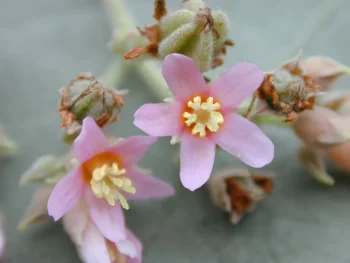
Hierba del Soldado: A Tropical Shrub for Warm Climate Gardens
If you’re gardening in Hawaii or other tropical zones and looking for a low-maintenance shrub with cheerful yellow blooms, you might want to get acquainted with hierba del soldado (Melochia umbellata). This perennial shrub has found its way into Hawaiian landscapes, where it’s made itself quite at home despite being originally from tropical Asia and Africa.
What is Hierba del Soldado?
Hierba del soldado, also known by its botanical name Melochia umbellata, is a woody shrub that typically grows to about 13-16 feet tall, though it can sometimes reach greater heights under the right conditions. As a multi-stemmed perennial, it develops several stems from near the ground, creating a bushy appearance that works well as a hedge or specimen plant.
You might also encounter this plant listed under its synonym, Melochia indica Kurz, in some gardening references.
Where Does It Grow?
While native to tropical regions of Asia and Africa, hierba del soldado has established itself in Hawaii, where it now reproduces on its own in the wild. It thrives in USDA hardiness zones 9-11, making it suitable only for the warmest parts of the United States.
- Species observed
- No observations
Garden Appeal and Landscape Role
This shrub offers several attractive features for tropical gardeners:
- Small, bright yellow flowers that appear in umbrella-like clusters
- Heart-shaped leaves that provide nice texture
- Ability to serve as a hedge, screen, or standalone ornamental plant
- Relatively compact size that fits well in most garden spaces
Hierba del soldado works particularly well in tropical and subtropical garden designs where you want year-round greenery with periodic bursts of color from the blooms.
Pollinator and Wildlife Benefits
The small yellow flowers are quite attractive to bees and butterflies, making this shrub a decent choice for pollinator-friendly gardens. The blooms provide nectar and the plant can support various beneficial insects throughout its growing season.
Growing Conditions and Care
One of the appealing aspects of hierba del soldado is its relatively easygoing nature:
- Light: Prefers full sun but tolerates partial shade
- Soil: Thrives in well-draining soil; not too picky about soil type
- Water: Drought tolerant once established, though regular watering promotes better growth
- Maintenance: Low maintenance; benefits from occasional pruning to maintain shape
Planting and Care Tips
Getting hierba del soldado established in your garden is fairly straightforward:
- Plant in spring when temperatures are consistently warm
- Choose a location with good drainage to prevent root rot
- Water regularly during the first growing season to help establish roots
- Prune lightly after flowering to maintain desired size and shape
- Apply a balanced fertilizer occasionally during the growing season
A Word About Native Alternatives
While hierba del soldado can be a perfectly fine addition to tropical gardens, it’s worth noting that this plant is not native to Hawaii or the continental United States. If you’re interested in supporting local ecosystems, you might consider exploring native Hawaiian shrubs that could fill a similar role in your landscape design.
Native plants often provide superior wildlife habitat and are better adapted to local growing conditions, potentially requiring even less maintenance than introduced species.
The Bottom Line
Hierba del soldado offers tropical gardeners an easy-to-grow shrub option with attractive flowers and foliage. While it’s not native to the regions where it’s commonly grown in the US, it doesn’t appear to be aggressively invasive either. If you’re drawn to its cheerful yellow blooms and low-maintenance nature, it could work well in your warm-climate garden – just remember to also consider native alternatives that might provide even greater benefits to your local ecosystem.