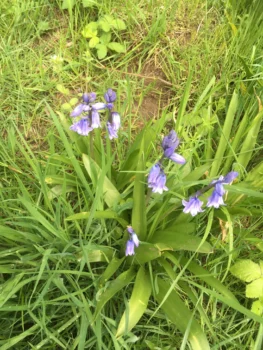
Hispanic Hyacinthoides: A Spring Beauty with a Complex Identity
Meet Hispanic hyacinthoides (Hyacinthoides hispanica), a charming spring-blooming bulb that’s been quietly making itself at home in North American gardens. With its graceful spikes of bell-shaped flowers and easy-going nature, this perennial has won over many gardeners – though its story is a bit more complicated than you might expect.
What’s in a Name?
You might encounter this plant under several different names in garden centers and catalogs. Botanically speaking, it’s Hyacinthoides hispanica, but it’s also been known as Endymion hispanicus and Scilla hispanica. Don’t let the name shuffle confuse you – they’re all referring to the same delightful spring bulb.
Where Does It Come From?
Here’s where things get interesting. Hispanic hyacinthoides isn’t actually native to North America – it originally hails from the Iberian Peninsula (Spain and Portugal) and parts of western France. However, it’s made itself quite comfortable here, reproducing on its own and persisting in the wild across several states and provinces.
Currently, you can find established populations in British Columbia, Ontario, Connecticut, Delaware, New York, Virginia, and Washington. It’s what botanists call a naturalized species – essentially, it’s become a permanent resident without an invitation.
- Species observed
- No observations
What Makes It Special?
Hispanic hyacinthoides is a forb – basically a non-woody perennial that dies back to the ground each year. In spring, it sends up sturdy flower spikes that can reach 12-18 inches tall, adorned with drooping, bell-shaped blooms in shades of blue, pink, or white. The flowers have a sweet fragrance that attracts bees and other pollinators, making it a valuable early-season nectar source.
The plant’s strap-like leaves emerge first, followed by the flower spikes in late spring. After blooming, the foliage gradually dies back, and the plant retreats underground until the next growing season.
Garden Role and Design Uses
This adaptable bulb works beautifully in several garden settings:
- Woodland gardens and shaded borders
- Naturalized areas where it can spread freely
- Spring bulb displays mixed with daffodils and tulips
- Ground cover in areas with dappled shade
Its ability to naturalize makes it perfect for low-maintenance landscapes where you want that wild garden look.
Growing Conditions and Care
One of the best things about Hispanic hyacinthoides is how undemanding it is. Here’s what it needs to thrive:
- Light: Partial shade to full shade (perfect under deciduous trees)
- Soil: Moist but well-draining; tolerates various soil types
- Hardiness: Zones 4-8
- Water: Regular moisture in spring, can tolerate drier conditions in summer dormancy
Plant the bulbs in fall, about 4-6 inches deep and 4-6 inches apart. Once established, they require minimal care and will often self-seed, gradually expanding their territory.
Should You Plant It?
This is where gardeners need to make a thoughtful choice. Hispanic hyacinthoides isn’t listed as invasive, and it does provide genuine benefits – early pollinator support, low-maintenance beauty, and reliable spring color. However, as a non-native species that readily naturalizes, some gardeners prefer to focus on native alternatives.
If you’re interested in supporting native ecosystems, consider these native spring bulbs instead:
- Wild ginger (Asarum canadense) for shade
- Trout lily (Erythronium americanum) for woodland settings
- Wild hyacinth (Camassia species) for similar flower form
The Bottom Line
Hispanic hyacinthoides is an attractive, low-maintenance bulb that can add reliable spring color to shaded gardens. While it’s not native to North America, it’s not currently considered problematic either. If you choose to grow it, you’ll be rewarded with years of lovely spring blooms and happy pollinators. Just be aware that it may spread beyond where you originally planted it – which could be a feature or a bug, depending on your gardening goals!
Whether you choose this charming immigrant or opt for native alternatives, the most important thing is creating a garden that brings you joy while supporting the broader ecosystem around you.