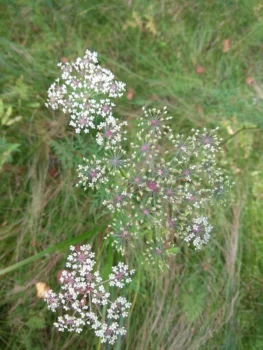
Hogfennel: A Wetland Plant for Specialized Gardens
If you’re looking to create a wetland garden or restore a boggy area on your property, you might come across hogfennel (Peucedanum palustre) in your research. This lesser-known perennial has some unique characteristics that make it worth understanding, whether you’re considering it for your landscape or simply curious about wetland plants.
What is Hogfennel?
Hogfennel is a perennial forb – basically a non-woody plant that comes back year after year. Like other members of the carrot family, it produces clusters of small white flowers in umbrella-like formations called umbels. The plant has the characteristic ferny, divided foliage you’d expect from this plant family.
Originally from Europe and western Asia, hogfennel has found its way to North America and now grows wild in Massachusetts. It’s classified as a non-native species that reproduces on its own without human intervention.
Where Does Hogfennel Grow?
Currently, hogfennel’s presence in the United States is documented in Massachusetts, though it may exist in other northeastern states as well. Its limited distribution suggests it hasn’t become widespread across the continent.
- Species observed
- No observations
Growing Conditions and Requirements
Here’s where hogfennel gets interesting – it’s an obligate wetland plant. This means it almost always grows in wetlands and requires consistently wet conditions to thrive. If you’re thinking about growing hogfennel, you’ll need:
- Consistently moist to wet soil conditions
- Full sun to partial shade
- USDA hardiness zones 4-8
- Bog-like or marshy conditions
Is Hogfennel Right for Your Garden?
Hogfennel might work for you if you have a specialized wetland garden, rain garden, or are involved in wetland restoration projects. Its small white flowers can attract various small insects, providing some pollinator benefits during its blooming period.
However, since hogfennel isn’t native to North America, you might want to consider native alternatives that provide similar benefits while supporting local ecosystems. Native wetland plants like wild bergamot, blue flag iris, or swamp milkweed offer comparable aesthetic appeal with greater ecological value.
Planting and Care Tips
If you decide to grow hogfennel, keep these tips in mind:
- Plant in consistently wet areas – this isn’t negotiable for this species
- Ensure good drainage to prevent stagnation while maintaining moisture
- Once established, it requires minimal maintenance
- Monitor for self-seeding, as it can reproduce on its own
The Bottom Line
Hogfennel is a specialized plant for specialized conditions. While it can serve a purpose in wetland gardens, its non-native status means it won’t provide the same ecological benefits as native wetland species. If you’re working with wet areas in your landscape, consider exploring native alternatives first. However, if you’re specifically interested in this European species for research or specialized restoration work, just ensure you can provide the consistently wet conditions it demands.
Remember, successful wetland gardening is all about matching plants to their preferred conditions – and hogfennel definitely knows what it likes!