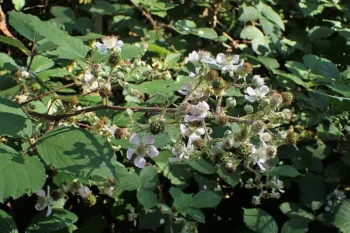
Hybrid Blackberry: A Cross Between Two Worlds
If you’ve stumbled across the name hybrid blackberry in your gardening research, you’ve likely encountered one of nature’s more curious creations. The hybrid blackberry (Rubus bifrons × ursinus) represents a fascinating botanical cross that occurs when two different blackberry species meet and mingle.
What Is This Mysterious Hybrid?
This particular hybrid blackberry is the offspring of two very different parents. While the exact details of this cross are not well-documented in horticultural literature, we do know it’s a perennial subshrub that stays relatively compact, typically growing under 1.5 feet tall and never exceeding 3 feet at maturity.
The hybrid nature of this plant means it combines traits from both parent species, though predicting exactly which characteristics will dominate can be tricky. Like most blackberries, it likely produces thorny canes and small aggregate fruits, but the specific growing habits and appearance may vary.
Where Does It Grow?
Currently, this hybrid blackberry has been documented in California, where it has established itself and reproduces without human intervention. As a non-native species that spreads naturally, it represents one of those plants that exists in the gray area between truly wild and cultivated species.
- Species observed
- No observations
Should You Plant It in Your Garden?
Here’s where things get a bit complicated. While this hybrid blackberry isn’t currently listed as invasive or noxious, its status as a non-native species that spreads naturally gives us pause. Blackberries in general are known for their aggressive growing habits, and hybrids can sometimes be unpredictable in their behavior.
Since detailed growing information and garden performance data for this specific hybrid are limited, it’s difficult to provide concrete recommendations about cultivation, care requirements, or expected performance in home landscapes.
Better Native Alternatives
Instead of taking a chance on this poorly-documented hybrid, consider these fantastic native blackberry options:
- California blackberry (Rubus ursinus) – A native trailing blackberry perfect for ground cover
- Salmonberry (Rubus spectabilis) – Offers beautiful flowers and edible orange berries
- Thimbleberry (Rubus parviflorus) – Large maple-like leaves and thornless canes
These native species provide known benefits to local wildlife, have established care requirements, and won’t pose potential ecological concerns in your landscape.
The Bottom Line
While the hybrid blackberry might sound intriguing, the lack of detailed horticultural information and its non-native status make it a risky choice for home gardeners. Your landscape – and local ecosystem – will benefit more from well-researched native alternatives that provide reliable performance and ecological value.
Sometimes the most responsible gardening choice is to skip the mystery plant and go with proven performers that support local wildlife and ecosystems. Your garden will thank you, and so will the birds and pollinators that depend on native plants for survival.