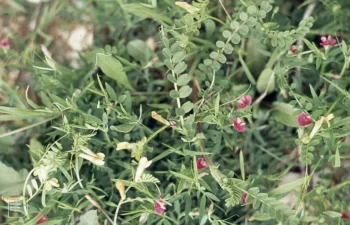
Inconspicuous Pea: A Little-Known Annual Legume
Ever stumbled across a plant name that made you do a double-take? Meet the inconspicuous pea (Lathyrus inconspicuus), a plant that lives up to its modest moniker. This annual legume is one of those botanical mysteries that keeps plant enthusiasts scratching their heads – not because it’s particularly fascinating, but because there’s surprisingly little information available about it!
What Is the Inconspicuous Pea?
The inconspicuous pea belongs to the Lathyrus genus, making it a cousin to the more familiar sweet peas and wild peas you might know. As its scientific name suggests, this is a plant that tends to fly under the radar. It’s classified as an annual forb, which means it completes its life cycle in one growing season and lacks the woody stems you’d find on shrubs or trees.
You might also encounter this plant listed under its synonym, Lathyrus erectus, though the accepted name remains Lathyrus inconspicuus.
Where Does It Grow?
Here’s where things get interesting (and a bit puzzling). In the United States, the inconspicuous pea has been documented in Maryland, where it’s considered a non-native species that reproduces on its own in the wild. This suggests it originally hails from somewhere else – likely the Mediterranean region or Europe, based on the distribution patterns of related Lathyrus species.
- Species observed
- No observations
The Challenge of Growing Something So… Inconspicuous
Here’s the honest truth: if you’re hoping to add the inconspicuous pea to your garden, you’re going to face some significant challenges. There’s remarkably little cultivation information available for this species. We don’t have solid data on:
- Specific growing conditions it prefers
- USDA hardiness zones where it thrives
- Its appeal to pollinators or wildlife
- Detailed care requirements
- Whether it has any invasive tendencies
This lack of information isn’t necessarily a red flag, but it does make successful cultivation something of a gamble.
Should You Plant It?
While we can’t definitively say the inconspicuous pea is problematic, the scarcity of horticultural information suggests it’s not widely cultivated for good reasons. As a non-native annual with limited documentation, it might be wise to consider better-studied alternatives.
If you’re drawn to legumes for your garden, consider these well-documented native options instead:
- Wild bergamot (for attracting pollinators)
- Native clovers (for nitrogen fixation)
- American groundnut (for edible tubers and flowers)
- Wild senna (for butterfly larvae)
The Bottom Line
The inconspicuous pea lives up to its name in more ways than one. While it’s not flagged as invasive or noxious, the lack of available growing information makes it a poor choice for most gardeners. Sometimes the most inconspicuous choice is to pass on inconspicuous plants and opt for native species with proven garden performance and ecological benefits.
If you’re absolutely determined to grow something from the Lathyrus genus, consider the better-documented sweet peas or research native legumes in your area that will provide clearer benefits to both your garden and local ecosystem.