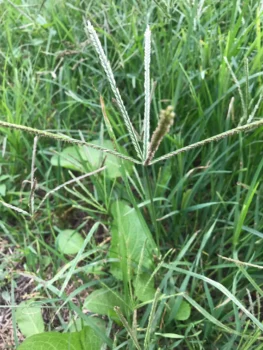
Indian Goosegrass: The Uninvited Guest in Your Garden
If you’ve ever noticed a tough, low-growing grass with distinctive finger-like seed heads popping up in your driveway cracks, garden paths, or lawn edges, you’ve likely encountered Indian goosegrass (Eleusine indica). This resilient annual grass, also known simply as goosegrass, wiregrass, or manienie ali’i, has a knack for showing up where you least expect it—and where you probably don’t want it.
What Exactly Is Indian Goosegrass?
Indian goosegrass is an annual grass that belongs to the same family as lawn grasses, but it’s definitely not one you’d want carpeting your yard. Originally hailing from Africa and Asia, this hardy grass has made itself at home across North America, from coast to coast and everywhere in between. You’ll find it established in all 50 states, plus Canada, Puerto Rico, and the U.S. Virgin Islands.
- Species observed
- No observations
This widespread distribution tells you something important: Indian goosegrass is incredibly adaptable and persistent. It’s classified as non-native throughout North America, meaning it wasn’t part of our original ecosystem but has successfully established itself in the wild without human help.
Recognizing Indian Goosegrass
Indian goosegrass has some distinctive features that make it relatively easy to identify:
- Low-growing, spreading growth habit that forms flat mats
- Distinctive seed heads that look like fingers radiating from a central point (usually 2-10 fingers)
- Light green to bluish-green color
- Smooth, flat leaf blades
- Grows as an annual, completing its life cycle in one growing season
Where You’ll Find It (Whether You Want It or Not)
One of the most remarkable things about Indian goosegrass is its ability to thrive in conditions that would stress out most other plants. It’s particularly fond of:
- Compacted soils where other plants struggle
- Disturbed areas like pathways and driveways
- Areas with poor drainage or occasional flooding
- Both sunny and partially shaded locations
The wetland status varies by region, but generally, Indian goosegrass prefers upland areas while tolerating occasional wet conditions. In most regions, it’s classified as Facultative Upland, meaning it usually grows in non-wetland areas but can handle some moisture.
Should You Plant Indian Goosegrass?
Here’s the short answer: you probably shouldn’t plant Indian goosegrass intentionally. While it’s not officially listed as invasive in most areas, it has several characteristics that make it less than ideal for home landscapes:
- Low aesthetic appeal—it looks weedy rather than ornamental
- Can be difficult to control once established
- Offers minimal benefits to pollinators (it’s wind-pollinated)
- Takes up space that could be used for more beneficial native plants
Better Native Alternatives
Instead of Indian goosegrass, consider these native grass options that offer better ecological benefits:
- Buffalo grass (Poilomia erus) for drought-tolerant lawns in prairie regions
- Little bluestem (Schizachyrium scoparium) for ornamental grass plantings
- Fine fescue species for low-maintenance lawn areas
- Regional native sedges for wet or challenging areas
These alternatives provide better wildlife habitat, support native pollinators and beneficial insects, and often require less maintenance once established.
Managing Indian Goosegrass
If Indian goosegrass has already claimed territory in your garden, here are some management strategies:
- Prevention: Maintain healthy, thick turf or groundcover to reduce bare spots where it can establish
- Hand removal: Pull plants before they set seed (easiest when soil is moist)
- Improve growing conditions: Address soil compaction and improve drainage to favor desirable plants
- Selective herbicides: Pre-emergent herbicides can prevent seeds from germinating
The Bottom Line
While Indian goosegrass is impressively tough and adaptable, it’s not a plant most gardeners want to encourage. Its weedy appearance and aggressive spreading habit make it better suited for vacant lots than carefully tended landscapes. Instead, focus your energy on native grasses and groundcovers that will provide beauty, support local wildlife, and give you more bang for your gardening buck.
Remember, the best defense against unwanted plants like Indian goosegrass is a healthy, diverse landscape filled with plants that are well-suited to your local conditions. When you give native plants the upper hand, they’ll naturally crowd out less desirable species—and you’ll have a more beautiful, low-maintenance garden to enjoy.