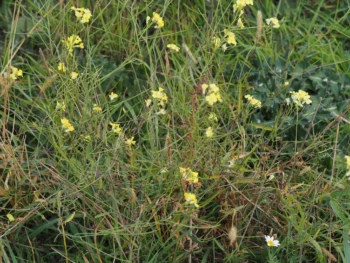
Indian Hedgemustard: A Non-Native Annual You Probably Don’t Want in Your Garden
If you’ve stumbled across the name Indian hedgemustard (Sisymbrium orientale) while researching plants for your garden, you might be wondering whether this annual herb deserves a spot in your landscape. The short answer? Probably not. While this member of the mustard family isn’t necessarily a garden villain, there are much better native alternatives that will serve your garden—and local ecosystem—far better.
What Exactly Is Indian Hedgemustard?
Indian hedgemustard is an annual forb, which is just a fancy way of saying it’s a non-woody herbaceous plant that completes its life cycle in one year. Originally from the Mediterranean region, Western Asia, and parts of Europe, this mustard family member has made itself at home across North America, though it definitely wasn’t invited to the party.
You might also see it listed under its scientific synonyms, including Brassica kaber var. orientalis, but Sisymbrium orientale is the name that’s stuck. As for other common names, this plant seems to have kept things simple—Indian hedgemustard appears to be its main moniker.
Where You’ll Find This Uninvited Guest
This non-native species has established itself across a surprisingly wide range of North American locations. You can find Indian hedgemustard growing wild in British Columbia, Alaska, Arizona, California, Massachusetts, Nevada, New Mexico, New York, Oregon, Pennsylvania, South Carolina, and Texas. It’s quite the traveler!
- Species observed
- No observations
The plant reproduces on its own in the wild without any human help and tends to stick around once it arrives, which explains its widespread distribution.
What Does Indian Hedgemustard Look Like?
Indian hedgemustard typically grows 2-4 feet tall and produces small yellow flowers arranged in elongated clusters. The leaves are deeply lobed, giving the plant a somewhat feathery appearance. While not entirely unattractive, it’s definitely more weedy than ornamental in its overall appearance.
Growing Conditions and Care
Here’s where things get interesting (and slightly problematic). Indian hedgemustard is remarkably adaptable and tough:
- Thrives in full sun
- Prefers disturbed soils but adapts to various soil types
- Drought tolerant once established
- Can grow in USDA hardiness zones 3-10
- Often found along roadsides, waste areas, and other disturbed sites
This adaptability is exactly why you probably don’t want to intentionally plant it—it’s a bit too good at making itself at home.
Wildlife and Pollinator Value
While Indian hedgemustard’s small yellow flowers may attract some small insects, its benefits to pollinators and wildlife are limited compared to native alternatives. The plant simply didn’t evolve alongside North American wildlife, so it doesn’t provide the specialized relationships that native species offer.
Why You Should Skip This One
Though Indian hedgemustard isn’t officially listed as invasive or noxious in our available data, its weedy nature and non-native status make it a poor choice for intentional cultivation. It tends to pop up on its own in disturbed areas, and there’s really no need to encourage it further.
Better Native Alternatives
Instead of planting Indian hedgemustard, consider these native alternatives that will provide similar yellow flowers while supporting local ecosystems:
- Wild mustard species native to your region
- Native sunflower species
- Goldenrod varieties
- Regional native wildflower mixes
These alternatives will give you beautiful blooms while providing genuine benefits to local pollinators and wildlife.
The Bottom Line
Indian hedgemustard is one of those plants that’s perfectly fine existing in the world—it’s just not something you need to actively invite into your garden. Its weedy nature, non-native status, and limited ecological benefits make it a poor choice when so many wonderful native alternatives are available. Save your garden space for plants that will truly enhance both your landscape and your local ecosystem.
If you do encounter Indian hedgemustard growing wild on your property, it’s not cause for alarm, but you probably don’t need to encourage it either. Focus your gardening energy on native species that will create a more balanced and beneficial landscape for everyone—including the pollinators and wildlife that call your area home.