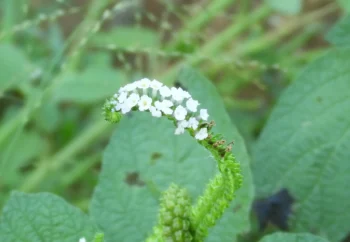
Indian Heliotrope: Understanding This Non-Native Annual
If you’ve ever noticed a small, weedy plant with tiny blue flowers growing in disturbed soil or along roadsides, you might have encountered Indian heliotrope (Heliotropium indicum). This annual forb has made itself quite at home across much of the United States, despite being originally from tropical Asia and the Pacific region.
What Is Indian Heliotrope?
Indian heliotrope is a non-native annual plant that belongs to the borage family. As a forb, it’s an herbaceous plant without significant woody tissue, completing its entire life cycle within one growing season. The plant is also known by its scientific synonym Tiaridium indicum, though most people simply call it Indian heliotrope.
This introduced species has established itself across a wide range of states, reproducing spontaneously without human intervention and persisting in many regions including the lower 48 states, Pacific Basin areas, Puerto Rico, and the U.S. Virgin Islands.
Where You’ll Find It
Indian heliotrope has spread extensively throughout the United States and can now be found in Alabama, Arkansas, Florida, Georgia, Illinois, Indiana, Kansas, Kentucky, Louisiana, Maryland, Massachusetts, Mississippi, Missouri, New York, North Carolina, Ohio, Oklahoma, South Carolina, Tennessee, Texas, Virginia, West Virginia, as well as in Guam, Palau, Puerto Rico, and the Virgin Islands.
- Species observed
- No observations
Recognizing Indian Heliotrope
This plant is relatively easy to identify once you know what to look for:
- Small, blue to purple flowers arranged in curved, scorpion-like clusters
- Hairy, oval-shaped leaves
- Low-growing, somewhat sprawling habit
- Typically found in disturbed soils and waste areas
Wetland Preferences
Indian heliotrope shows interesting regional preferences when it comes to moisture:
- In coastal and southern regions (Atlantic and Gulf Coastal Plain, Caribbean, Eastern Mountains and Piedmont), it’s facultative, meaning it can thrive in both wet and dry conditions
- In northern and central regions (Great Plains, Midwest, Northcentral & Northeast), it leans more toward wetland areas but can still survive in drier spots
Should You Grow Indian Heliotrope?
While Indian heliotrope isn’t considered invasive or noxious, it’s typically viewed as a weedy species rather than an ornamental plant. Most gardeners encounter it as a volunteer rather than something they’ve intentionally planted. The flowers may provide some benefit to small pollinators, but the plant’s overall contribution to garden ecosystems is limited.
If you’re looking to attract pollinators and support local wildlife, consider these native alternatives instead:
- Wild bergamot (Monarda fistulosa) for purple flowers and pollinator appeal
- Blue mistflower (Conoclinium coelestinum) for similar blue coloring
- Native asters for late-season blooms and wildlife benefits
Growing Conditions and Care
If Indian heliotrope appears in your garden naturally, it’s quite adaptable and requires minimal care. The plant tolerates:
- Poor, disturbed soils
- Full sun to partial shade
- Variable moisture conditions
- USDA hardiness zones 8-11 (may appear as an annual in cooler zones)
As an annual, it completes its life cycle in one season and self-seeds readily, which explains its successful spread across diverse regions.
The Bottom Line
Indian heliotrope is one of those plants that most gardeners will encounter rather than seek out. While it’s not harmful to grow, it doesn’t offer significant benefits compared to native alternatives that would better support local ecosystems. If you find it growing naturally on your property, you can leave it be without concern, but for intentional plantings, consider native species that will provide greater value to both your garden and local wildlife.