Non-native Plants

Indian Lovegrass

Eragrostis pilosa

USDA symbol: ERPI2

annual grass

Canada: non-native, naturalized
Hawaii: non-native, naturalized
Lower 48 states: non-native, naturalized
Pacific Basin excluding Hawaii: non-native, naturalized
Puerto Rico: non-native, naturalized
U.S. Virgin Islands: non-native, naturalized

If you’ve ever noticed a delicate, wispy grass sprouting up in disturbed areas of your garden or along roadsides, you might have encountered Indian lovegrass (Eragrostis pilosa). This small annual grass has a knack for showing up uninvited, and while it’s not necessarily a garden villain, it’s probably not the ...

Indian Lovegrass: A Non-Native Grass You Might Already Have

If you’ve ever noticed a delicate, wispy grass sprouting up in disturbed areas of your garden or along roadsides, you might have encountered Indian lovegrass (Eragrostis pilosa). This small annual grass has a knack for showing up uninvited, and while it’s not necessarily a garden villain, it’s probably not the grass you’d choose for your landscape either.

What Is Indian Lovegrass?

Indian lovegrass is an annual grass that belongs to the large family of grasses, sedges, and grass-like plants. Despite its common name suggesting Indian origins, this adaptable little grass actually hails from Europe, Asia, and Africa. It’s what botanists call a cosmopolitan species – basically, it’s made itself at home just about everywhere.

You might also see it listed under several scientific synonyms, including Eragrostis multicaulis, Eragrostis perplexa, or its original name Poa pilosa, though Eragrostis pilosa is the accepted name today.

Where You’ll Find It

Indian lovegrass has spread remarkably well across North America. You can find it growing wild in almost every U.S. state, from Alabama to Wyoming, plus several Canadian provinces including British Columbia, Nova Scotia, Ontario, and Quebec. It’s also established itself in Hawaii, Puerto Rico, the U.S. Virgin Islands, and various Pacific territories.

  • Species observed
  • No observations

What Does It Look Like?

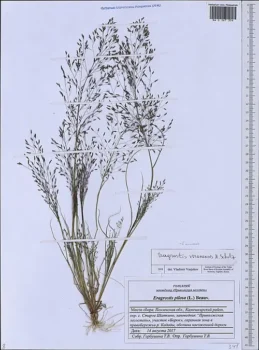
This grass won’t win any beauty contests, but it has a certain delicate charm. Indian lovegrass typically grows as a small, fine-textured annual with thread-like leaves and airy, open seed heads that give it an almost cloud-like appearance when mature. The whole plant has a wispy, ephemeral quality that some might find appealing in a wild, naturalistic way.

Growing Conditions

Indian lovegrass is the ultimate opportunist when it comes to growing conditions. It thrives in:

  • Disturbed soils and waste areas
  • Roadsides and field edges
  • Poor, dry conditions where other plants struggle
  • Areas with minimal competition from other vegetation

Across most regions, it’s classified as facultative upland, meaning it usually prefers non-wetland conditions but can tolerate some moisture. Only in Hawaii does it show more flexibility with both wet and dry conditions.

Should You Plant Indian Lovegrass?

Here’s the honest truth: while Indian lovegrass isn’t considered invasive or harmful, it’s not particularly useful for most gardening purposes either. It doesn’t provide significant benefits to pollinators (being wind-pollinated), and its wildlife value is limited compared to native alternatives.

If you’re looking for native grass options that will provide real ecological benefits, consider these alternatives instead:

  • Little bluestem (Schizachyrium scoparium) for prairie-style gardens
  • Buffalo grass (Poaceae dactyloides) for drought-tolerant lawns
  • Regional native sedges for wet areas
  • Local native bunch grasses for naturalistic landscapes

Managing Indian Lovegrass

If Indian lovegrass has already appeared in your garden, you don’t need to panic. Since it’s an annual, it completes its life cycle in one year. You can simply mow or pull it before it sets seed if you don’t want it spreading. However, its seeds can remain viable in the soil, so you might see it return in disturbed areas.

The Bottom Line

Indian lovegrass is one of those plants that exists in the middle ground – not native, but not aggressively invasive either. It’s adapted well to life alongside humans, popping up wherever we’ve disturbed the soil. While there’s no urgent need to wage war against it, there are much better choices if you’re intentionally planning your landscape. Stick with native grasses that will support local wildlife and provide the ecological benefits your garden ecosystem really needs.

Eragrostis pilosa is also known as...

Often we refer to plants by their common names. When shopping for plants the scientific name is the best way to positively identify the plant species you desire. But some plants have more than one name! While it doesn't happen often, nurseries might display one name while you're searching for another. Eragrostis pilosa is also known as:

Eragrostis multicaulis | USDA symbol: ERMU5
Eragrostis perplexa | USDA symbol: ERPE16
Eragrostis pilosa var. perplexa | USDA symbol: ERPIP
Eragrostis pilosa var. pilosa | USDA symbol: ERPIP3
Poa pilosa | USDA symbol: POPI8

Why do some plants have more than one name? Over time plant species may be renamed for a few reasons:

  1. Botanists in different regions named the same plant without knowing it had already been classified.
  2. A species was reclassified after scientific advances in, for example, DNA analysis.
  3. Slight variations within a species are sometimes mistakenly identified as entirely new species.

Wetland Status

The rule of seasoned gardeners and landscapers is to choose the "right plant for the right place" — matching plants to their ideal growing conditions, so they'll thrive with less care and fewer inputs. But the simplicity of this catchphrase conceals how tricky plant selection can be if you don't have the right information. While tags on nursery plants list watering requirements, there's more to the story.

Knowing a plant's wetland status can simplify the process by revealing the interaction between plants, water, and soil. You might be surprised to learn that popular landscape plants are wetland species! And what may be a wetland plant in one area, in another it might thrive in drier conditions. The table below gives insight into the preferred growing conditions of this plant throughout its geographical distribution.

Region
Preferred Habitat

Arid West (AZ, CA, CO, ID, MT, NV, NM, OR, TX, UT, WA, WY)

Facultative Upland

Atlantic and Gulf Coastal Plain (AL, AR, DC, DE, FL, GA, IL, KY, LA, MD, MS, MO, NC, NJ, OK, PA, SC, TN, TX, VA)

Facultative Upland

Caribbean (PR, VI)

Facultative Upland

Eastern Mountains and Piedmont (AL, AR, DC, DE, GA, IL, IN, KS, KY, MD, MO, NC, NJ, NY, OH, OK, PA, SC, TN, VA, WV)

Facultative Upland

Great Plains (CO, KS, MN, MT, NE, NM, ND, OK, SD, TX, WY)

Facultative Upland

Hawaii ()

Facultative

Midwest (IL, IN, IA, KS, KY, MI, MN, MO, NE, ND, OK, OH, SD, WI)

Facultative Upland

Northcentral & Northeast ()

Facultative Upland

Western Mountains, Valleys, and Coast (AZ, CA, CO, ID, MT, NV, NM, OR, SD, UT, WA, WY)

Facultative Upland
Wetland Glossary
Obligate Wetland
Facultative Wetland
Facultative
Facultative Upland
Obligate Upland
Almost always occurs in wetlands
Usually occurs in wetlands but may occur in non-wetlands
Can occur in wetlands and non-wetlands
Usually occurs in non-wetlands but may occur in wetlands
Almost never occurs in wetlands

Classification

Group: Monocot
Kingdom: Plantae - Plants
Subkingdom: Tracheobionta - Vascular plants
Superdivision: Spermatophyta - Seed plants
Division: Magnoliophyta - Flowering plants
Class: Liliopsida - Monocotyledons
Subclass: Commelinidae
Order: Cyperales
Family: Poaceae Barnhart - Grass family
Genus: Eragrostis von Wolf - lovegrass

Species: Eragrostis pilosa (L.) P. Beauv. - Indian lovegrass

Plant data source: USDA, NRCS 2025. The PLANTS Database. https://plants.usda.gov,. 2/25/2025. National Plant Data Team, Greensboro, NC USA