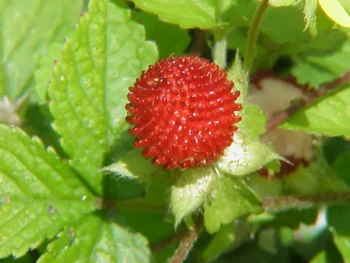
Indian Strawberry: The Look-Alike Ground Cover That’s Not What It Seems
If you’ve ever spotted what looks like tiny strawberries growing wild in your yard and wondered if they’re safe to eat, you’ve likely encountered Indian strawberry (Duchesnea indica). This charming little ground cover might fool you at first glance, but it’s quite different from the strawberries in your kitchen—and there’s more to this plant than meets the eye.
What Exactly Is Indian Strawberry?
Indian strawberry is a perennial forb that spreads along the ground through runners, much like its edible cousin. But here’s where things get interesting: despite its common name and appearance, this plant isn’t actually native to North America. Originally hailing from Asia, including India, China, and Japan, it’s become a naturalized resident across much of the United States and parts of Canada.
You might also see this plant referenced by its scientific synonyms, including Fragaria indica or Potentilla indica, but Duchesnea indica is the current accepted name. The plant produces small yellow flowers (not white like true strawberries) followed by bright red, strawberry-shaped fruits that are technically edible but quite bland and dry.
Where You’ll Find Indian Strawberry
This adaptable plant has made itself at home across a remarkably wide range, growing in Alabama, Arkansas, California, Connecticut, Delaware, District of Columbia, Florida, Georgia, Illinois, Indiana, Iowa, Kentucky, Louisiana, Maryland, Michigan, Mississippi, Missouri, Nebraska, New Jersey, New York, North Carolina, Ohio, Oklahoma, Oregon, Pennsylvania, South Carolina, Tennessee, Texas, Virginia, Washington, West Virginia, Wisconsin, as well as British Columbia and Ontario in Canada.
- Species observed
- No observations
The Appeal and the Dilemma
So why might you want—or not want—Indian strawberry in your garden? Let’s break it down:
The Good: This plant is incredibly low-maintenance and adaptable. It thrives in USDA hardiness zones 4-10, tolerates various light conditions from partial shade to full sun, and isn’t picky about soil as long as it’s reasonably well-draining. The trailing habit and three-part leaves create attractive ground coverage, and the small yellow flowers followed by colorful red fruits add visual interest throughout the growing season.
The Considerations: As a non-native species that spreads readily through runners, Indian strawberry can become quite aggressive in the right conditions. While it’s not officially listed as invasive in most areas, its enthusiastic spreading habit means it might overwhelm more delicate native plants in your garden.
Growing Conditions and Care
If you decide to grow Indian strawberry, you’ll find it refreshingly undemanding. Here’s what it prefers:
- Light: Partial shade to full sun
- Soil: Moist but well-draining; adapts to various soil types
- Water: Moderate moisture; drought-tolerant once established
- Maintenance: Minimal—mainly controlling spread if needed
The plant’s wetland status varies by region, but generally prefers upland conditions, meaning it usually grows in non-wetland areas though it can occasionally tolerate some moisture.
Role in Your Landscape
Indian strawberry works well as ground cover in informal garden settings, naturalized areas, or woodland gardens where its spreading nature won’t cause problems. It’s particularly useful for filling in bare spots where other plants struggle to establish. The small flowers do provide some benefit to pollinators, particularly small bees and flies that can access the modest nectar sources.
However, avoid planting it in formal gardens or near rare native plants where its vigorous growth might cause issues. If you’re looking to control its spread, regular trimming of runners and border management will be necessary.
Native Alternatives to Consider
If you love the idea of strawberry-like ground cover but want to support native ecosystems, consider these alternatives:
- Wild strawberry (Fragaria virginiana) – produces white flowers and edible berries
- Barren strawberry (Geum fragarioides) – similar appearance without the spreading habit
- Wild ginger (Asarum canadense) – excellent native ground cover for shaded areas
The Bottom Line
Indian strawberry isn’t inherently problematic, but it’s worth understanding what you’re getting into. If you have space where an enthusiastic ground cover won’t cause issues and you don’t mind managing its spread, it can be an attractive, low-maintenance addition to your garden. However, if you’re trying to create habitat for native wildlife or maintain a carefully curated native plant garden, you might want to pass on this one in favor of indigenous alternatives.
Remember, gardening is about making informed choices that work for your specific situation and values. Whether you choose Indian strawberry or opt for native alternatives, understanding your plants’ origins and behaviors helps create more successful and intentional landscapes.