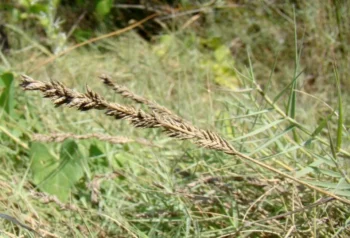
Indian Walnut: A Salt-Tolerant Grass for Challenging Landscapes
If you’ve ever struggled with salty, alkaline soil that seems to kill everything you plant, you might want to learn about Indian walnut (Aeluropus littoralis). This hardy perennial grass has made quite a journey from its Mediterranean homeland to find a foothold in the American Southwest, particularly Arizona.
What Is Indian Walnut?
Don’t let the name fool you – Indian walnut isn’t a tree that produces nuts! It’s actually a tough-as-nails grass that forms dense, low-growing mats. This perennial belongs to the grass family and has earned its place in some of the most challenging growing conditions you can imagine.
As a non-native species that has established itself in Arizona, Indian walnut represents an interesting case study in plant adaptation. While it’s not originally from North America, it has found a niche in areas where few other plants dare to grow.
Where Does Indian Walnut Grow?
In the United States, you’ll find Indian walnut primarily in Arizona, though its native range spans the Mediterranean region, North Africa, and parts of Asia. It thrives in the kind of harsh, salty conditions that would make most plants wave the white flag of surrender.
- Species observed
- No observations
Should You Plant Indian Walnut in Your Garden?
Here’s where things get interesting. Indian walnut isn’t your typical garden center find, and for good reason. While it’s incredibly hardy and useful in specific situations, it’s not necessarily the first choice for most home gardeners.
The Good
- Extremely salt and drought tolerant
- Thrives in alkaline soils where other plants struggle
- Low maintenance once established
- Excellent for erosion control
- Hardy in USDA zones 8-11
The Not-So-Good
- Limited aesthetic appeal compared to ornamental grasses
- Offers minimal benefits to pollinators (wind-pollinated)
- Can form dense mats that may crowd out other plants
- Unknown invasive potential in some areas
Growing Conditions and Care
If you’re dealing with problem soils and considering Indian walnut, here’s what it needs to thrive:
- Sunlight: Full sun exposure
- Soil: Tolerates saline and alkaline conditions better than most plants
- Water: Drought tolerant once established, though some water helps with establishment
- Climate: Best suited for warm, dry climates in zones 8-11
Once established, this grass requires very little care. It’s the kind of plant that laughs at neglect and keeps on growing.
Landscape Uses
Indian walnut works best in specialized applications rather than traditional garden settings:
- Erosion control on slopes with poor soil
- Ground cover in xeriscaping projects
- Salt-tolerant landscaping near roads treated with de-icing salt
- Coastal areas with salt spray
Consider Native Alternatives
Before choosing Indian walnut, consider exploring native grass options that might provide similar benefits while supporting local ecosystems. Native alternatives often offer better wildlife value and are naturally adapted to your local conditions. Some possibilities might include native sedges or salt-tolerant grasses indigenous to your region.
Consult with your local extension office or native plant society to discover what salt-tolerant native grasses might work in your challenging soil conditions.
The Bottom Line
Indian walnut is a specialist plant for specialist situations. If you’re battling extremely salty or alkaline soil and need something – anything – that will grow and help prevent erosion, it might be worth considering. However, for most gardeners, exploring native alternatives first will likely yield better results for both your landscape and local wildlife.
Remember, the best plant for your garden is usually one that naturally wants to grow in your conditions while providing benefits to the local ecosystem. Sometimes that means looking beyond the obvious choices to find the perfect match for your unique growing challenges.