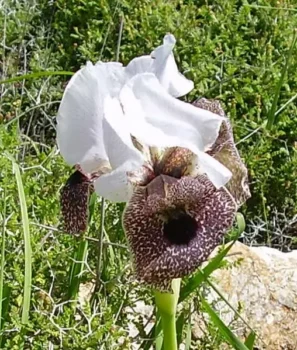
Iris bismarckiana: The Mysterious Iris That’s Hard to Find
If you’ve stumbled upon the name Iris bismarckiana in your gardening research, you’re probably scratching your head right about now. Don’t worry – you’re not alone! This particular iris is something of an enigma in the gardening world, and for good reason.
What We Know (And Don’t Know) About This Elusive Iris
Iris bismarckiana is a plant that exists more in botanical references than in garden centers. While it carries the prestigious iris name – a genus beloved by gardeners for centuries – this particular species remains frustratingly mysterious. The limited information available suggests it may have origins in the Middle East or Mediterranean region, but even this geographic distribution is uncertain.
Unlike its famous cousins like the bearded iris or Siberian iris, Iris bismarckiana doesn’t have a widely recognized common name, which tells us something important: it’s not commonly grown or well-known in mainstream horticulture.
Should You Try to Grow It?
Here’s where things get tricky. Without clear information about its native status, growing requirements, or even its appearance, recommending Iris bismarckiana becomes challenging. We don’t know:
- Its hardiness zones
- Preferred growing conditions
- Mature size or growth habit
- Blooming characteristics
- Care requirements
Better Iris Alternatives for Your Garden
If you’re drawn to the idea of growing an unusual iris, consider these well-documented and reliable alternatives instead:
- Native iris species for your region – these will be better adapted to local conditions
- Iris versicolor (Blue Flag Iris) – great for wet areas and native to much of North America
- Iris cristata (Dwarf Crested Iris) – a charming native groundcover iris
- Iris virginica (Virginia Iris) – excellent for rain gardens and naturalized areas
The Takeaway
While the mystery of Iris bismarckiana is intriguing, it’s probably not the best choice for your garden. The lack of available information about its growing requirements, appearance, and ecological impact makes it a risky proposition. Instead, focus on well-documented iris species – especially those native to your area – that will give you reliable results and support local ecosystems.
Sometimes the most responsible gardening choice is knowing when to pass on a plant, no matter how exotic its name might sound. Your garden (and your sanity) will thank you for choosing plants with proven track records and clear growing instructions.