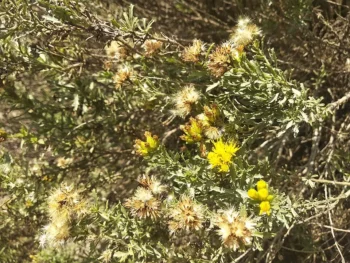
Isocoma veneta: A Mysterious Native Plant Worth Investigating
If you’ve stumbled across the name Isocoma veneta in your plant research, you might be scratching your head wondering what exactly this plant is and whether it belongs in your garden. You’re not alone! This particular species is something of a botanical mystery, with limited information available in common gardening resources.
What We Know About Isocoma veneta
Isocoma veneta belongs to the Asteraceae family (the sunflower family) and was historically known by the synonym Haplopappus venetus. Beyond these basic taxonomic details, concrete information about this specific species is surprisingly scarce in horticultural literature.
The Challenge of Identification and Information
Here’s where things get interesting (and a bit frustrating for curious gardeners): Isocoma veneta appears to be either extremely rare, potentially misidentified in trade, or possibly represents an outdated taxonomic classification. Most references to Isocoma species in gardening contexts refer to better-known relatives like Isocoma menziesii (coastal goldenbush).
Geographic Distribution
Unfortunately, reliable information about where Isocoma veneta naturally occurs is not readily available through standard horticultural and botanical sources.
Should You Plant Isocoma veneta?
Given the lack of available information, here’s our honest recommendation: proceed with extreme caution, if at all. Here’s why:
- Unknown native status means we can’t confirm if it’s appropriate for your local ecosystem
- Lack of growing information makes successful cultivation nearly impossible
- Uncertain identification could mean you’re getting a different plant entirely
- No data on invasive potential means unknown environmental risk
Better Alternatives to Consider
Instead of wrestling with this botanical puzzle, consider these well-documented native Asteraceae family alternatives:
- If you’re in California: Isocoma menziesii (coastal goldenbush)
- For dry western gardens: Ericameria species (rabbitbrush)
- Eastern gardeners: Solidago species (goldenrod)
- Widespread options: Symphyotrichum species (asters)
If You’re Determined to Learn More
For the truly curious, here are some steps to investigate further:
- Contact your local botanical garden or university extension office
- Consult regional flora guides for your specific area
- Reach out to native plant societies in your region
- Verify plant identification with botanical experts before purchasing
The Bottom Line
Sometimes the most responsible gardening advice is to admit when we don’t know enough. Isocoma veneta falls into that category—a plant that needs more research before we can recommend it for home gardens. When in doubt, choose well-documented native plants that we know will thrive in your garden and support local ecosystems.
Remember, the best native garden is one filled with plants we understand well enough to grow successfully and responsibly!