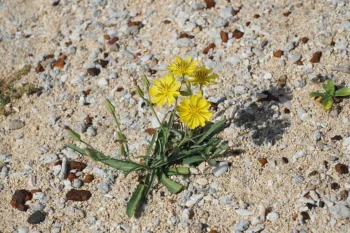
Ixeris: A Delicate Non-Native Perennial for Your Garden
If you’ve stumbled across the name ixeris in your gardening adventures, you might be wondering what exactly this little-known plant brings to the table. Ixeris is a perennial forb that’s quietly made itself at home in parts of the northeastern United States, offering gardeners a glimpse into the world of Asian wildflowers right in their own backyards.
What Exactly is Ixeris?
Ixeris is a non-native perennial that belongs to the daisy family. Originally from East Asia, this herbaceous plant has established itself as a naturalized resident in Delaware, New Jersey, New York, and Pennsylvania. As a forb, it lacks woody stems and instead produces soft, green growth that dies back each winter only to return faithfully each spring.
The plant forms neat rosettes of leaves and produces small, cheerful yellow flowers that resemble tiny dandelions or chicory blooms. It’s the kind of plant that might catch your eye during a spring walk, making you pause and wonder, What’s that pretty little thing?
- Species observed
- No observations
Garden Appeal and Landscape Role
While Ixeris won’t win any awards for showstopping drama, it has its own quiet charm. The delicate yellow flowers appear in early spring, providing a gentle splash of color when many other plants are just waking up. This makes it particularly valuable for:
- Naturalized garden areas where a wild, informal look is desired
- Early season color in partially shaded spots
- Ground cover in areas where more aggressive plants might struggle
- Meadow-style plantings that celebrate diversity
Growing Conditions and Care
One of Ixeris’s strongest suits is its easy-going nature. This adaptable perennial thrives in USDA hardiness zones 5 through 9, handling a range of conditions with minimal fuss. Here’s what it prefers:
- Light: Partial shade to full sun, though it appreciates some afternoon shade in hotter climates
- Soil: Well-draining soil of average fertility – it’s not particularly picky
- Water: Moderate moisture, but established plants show good drought tolerance
- Maintenance: Very low – this is essentially a plant it and forget it perennial
Planting and Propagation
Ixeris is remarkably self-sufficient once established. The plant readily self-seeds, which means you might find new plants popping up in unexpected spots – a trait that some gardeners love and others find mildly annoying. If you’re introducing it to your garden, spring is the ideal planting time.
Keep in mind that this plant can spread naturally through seed dispersal, so it’s worth monitoring its behavior in your specific garden conditions.
Wildlife and Pollinator Benefits
The small yellow flowers attract various pollinators, including bees and beneficial insects, making Ixeris a contributor to local ecosystem health. While it may not be the most spectacular pollinator magnet, every little bit helps in supporting our buzzing friends.
Should You Grow Ixeris?
Here’s the balanced truth: Ixeris is a perfectly pleasant, low-maintenance perennial that won’t cause any major problems in most gardens. However, as a non-native species, it’s worth considering whether there might be native alternatives that could provide similar benefits while better supporting local wildlife.
If you’re drawn to early-blooming, yellow-flowered perennials, consider these native alternatives:
- Wild ginger (Asarum canadense) for shaded areas
- Golden ragwort (Packera aurea) for similar yellow spring blooms
- Wild columbine (Aquilegia canadensis) for delicate spring color
That said, if you already have Ixeris growing in your area or you’re specifically interested in this particular plant, there’s no urgent reason to avoid it. Just be mindful of its spreading tendencies and consider it as part of a broader garden palette that prioritizes native species.
The Bottom Line
Ixeris is like that quiet neighbor who never causes trouble but doesn’t particularly stand out either. It’s a solid, dependable perennial that offers gentle spring beauty without demanding much attention. While it may not be the most exciting addition to your plant palette, it certainly won’t disappoint those who appreciate subtle, naturalistic garden moments.