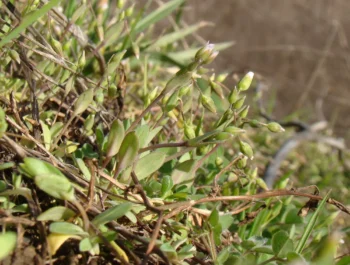
Jagged Chickweed: A Hardy Little Spring Bloomer Worth Knowing
If you’ve ever noticed tiny white flowers popping up in sidewalk cracks or disturbed garden areas in early spring, you might have encountered jagged chickweed (Holosteum umbellatum). This unassuming little annual has quietly made itself at home across much of North America, and while it may not win any beauty contests, it has some interesting qualities that might surprise you.
What Exactly Is Jagged Chickweed?
Jagged chickweed is a small annual forb – essentially a non-woody herbaceous plant that completes its entire life cycle in one growing season. Originally from Europe and western Asia, this adaptable little plant has established itself across an impressive range, from coast to coast and border to border.
The plant gets its jagged name from the slightly toothed edges of its small, oval leaves. Its delicate white flowers appear in umbrella-like clusters (called umbels) atop slender stems, typically reaching just 2-8 inches tall. Don’t blink or you might miss its brief but charming spring show!
Where You’ll Find It
This widespread species has made itself comfortable across most of the United States and parts of Canada, thriving in states from Alabama to Wyoming, and provinces including British Columbia and Ontario. It’s particularly fond of disturbed soils, roadsides, gardens, and anywhere the ground has been turned over.
- Species observed
- No observations
The Good, The Bad, and The Practical
So should you plant jagged chickweed in your garden? Well, that depends on what you’re looking for. Here’s the honest truth:
Reasons you might appreciate it:
- Extremely low maintenance – thrives on neglect
- Early spring blooms provide nectar for small pollinators when little else is flowering
- Tolerates poor, dry soils where other plants struggle
- Self-seeds readily, filling in bare spots naturally
- Hardy across USDA zones 3-9
Reasons you might want to skip it:
- Not native to North America
- Can spread aggressively through self-seeding
- Very short bloom period
- Modest aesthetic appeal compared to native alternatives
Growing Jagged Chickweed (If You Choose To)
If you decide to give jagged chickweed a try, you’ll find it refreshingly easy to please. This plant actually prefers poor, well-draining soils and full sun to partial shade. It’s drought tolerant once established and requires virtually no care.
The plant will self-seed readily, so be prepared for it to show up in unexpected places around your garden. Seeds germinate in fall or early spring, and the plants bloom from March to May before setting seed and dying back.
Better Native Alternatives
While jagged chickweed isn’t considered invasive, native plant enthusiasts might prefer these North American alternatives that offer similar benefits:
- Spring beauty (Claytonia virginica) for early spring flowers
- Whitlow grass (Draba verna) for small white blooms in disturbed areas
- Mouse-ear chickweed (Cerastium arvense) for a native chickweed option
- Early saxifrage (Micranthes virginiensis) for rock garden settings
The Bottom Line
Jagged chickweed is one of those plants that falls into the interesting but not essential category. It’s hardy, reliable, and provides early nectar sources, but it won’t transform your garden into a showstopper. If you already have it growing naturally on your property, there’s no harm in letting it be – just keep an eye on its spreading habits. If you’re planning new plantings, consider giving native alternatives a try first. They’ll provide similar benefits while supporting local ecosystems more effectively.
Sometimes the most unremarkable plants teach us the most about resilience and adaptation. Jagged chickweed may be small and humble, but it’s certainly made the most of its opportunities in the New World.