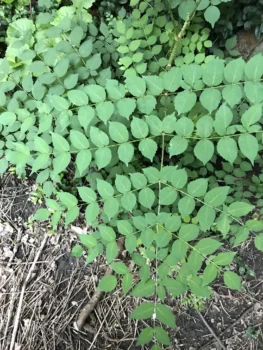
Japanese Angelica Tree: A Striking But Problematic Non-Native
The Japanese angelica tree (Aralia elata) might catch your eye with its dramatic, tropical-looking foliage and towering presence, but before you fall head-over-heels for this East Asian beauty, there’s something important you need to know. While it’s undeniably stunning, this tree comes with some serious baggage that every responsible gardener should consider.
What Is the Japanese Angelica Tree?
Also known by its botanical name Aralia elata, this perennial woody giant is a true showstopper. Picture a tree that can reach heights of 13-16 feet (or even taller under the right conditions), crowned with enormous compound leaves that can stretch up to three feet long. In late summer, it produces clusters of creamy white flowers that practically buzz with pollinator activity, followed by dark purple berries that birds absolutely love.
Originally hailing from Japan, Korea, China, and eastern Russia, this architectural wonder has found its way into North American landscapes—and that’s where our story takes a concerning turn.
The Invasive Reality Check
Here’s the tough love moment: Despite its undeniable beauty, the Japanese angelica tree is considered invasive in several areas. It holds a Tier 2 invasive status in Maryland and is actually prohibited in New Hampshire. This non-native species has proven it can reproduce spontaneously in the wild without human help, establishing persistent populations that can outcompete our native plants.
Currently, you’ll find established populations in Ontario and several U.S. states including Connecticut, Illinois, Michigan, New Jersey, New York, Ohio, Oregon, Pennsylvania, Washington, and Wisconsin.
- Species observed
- No observations
Why should you care? When non-native plants escape cultivation and spread aggressively, they can disrupt local ecosystems, crowding out native species that our local wildlife depends on for food and habitat. It’s like inviting a guest who ends up rearranging your entire house without permission.
Growing Characteristics (Just So You Know)
If you’re curious about what makes this tree so successful (perhaps too successful), here are its growing traits:
- Hardiness: Thrives in USDA zones 4-8
- Growth rate: Fast-growing
- Size: Typically 13-16 feet tall, can grow larger
- Soil preferences: Adaptable to various soil types, prefers moist, well-drained conditions
- Light requirements: Partial shade to full sun
- Propagation: Can spread through root suckers (which contributes to its invasive tendencies)
Wildlife and Pollinator Appeal
Here’s where it gets tricky—the Japanese angelica tree does offer some ecological benefits. Its late-summer blooms provide nectar when many other flowering trees have finished for the season, attracting bees, wasps, and other pollinators. The berries feed birds, which unfortunately helps spread the seeds far and wide.
While these benefits sound appealing, they don’t outweigh the potential ecological harm this species can cause when it escapes cultivation.
Our Recommendation: Choose Native Alternatives Instead
Rather than risking the environmental consequences, why not choose native alternatives that offer similar aesthetic appeal without the invasive baggage? Consider these fantastic native options:
- American elderberry (Sambucus canadensis): Offers clusters of white flowers and dark berries
- Staghorn sumac (Rhus typhina): Provides dramatic compound foliage and architectural form
- American mountain ash (Sorbus americana): Features compound leaves and colorful berries
- Kentucky coffee tree (Gymnocladus dioicus): Delivers bold, architectural presence with large compound leaves
The Bottom Line
We get it—the Japanese angelica tree is gorgeous, fast-growing, and seemingly easy to please. But as gardeners who care about our local ecosystems, sometimes the most beautiful choice isn’t the most responsible one. By choosing native alternatives, you can create equally stunning landscapes while supporting local wildlife and protecting natural areas from invasive species.
Remember, every plant we choose is a vote for the kind of environment we want to create. Let’s make those votes count for something positive!