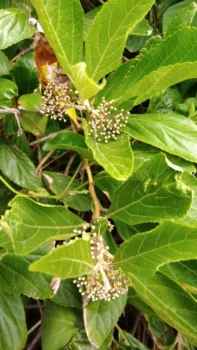
Japanese Callicarpa: A Beautiful But Questionable Choice for Your Garden
If you’ve ever spotted a shrub absolutely dripping with brilliant purple berries in late fall, chances are you’ve encountered Japanese callicarpa (Callicarpa japonica). This eye-catching plant certainly knows how to make an entrance, but before you rush to add one to your garden, there are some important things you should know about this non-native beauty.
What Exactly Is Japanese Callicarpa?
Japanese callicarpa is a perennial, multi-stemmed woody shrub that typically grows 4-5 meters (13-16 feet) tall, though it can sometimes reach greater heights depending on growing conditions. As its name suggests, this deciduous shrub hails from Japan and other parts of East Asia, making it a non-native species in North American gardens.
The plant belongs to the mint family and produces small, inconspicuous flowers in summer that give way to its claim to fame: clusters of vibrant purple berries that persist well into fall and early winter.
Where You’ll Find It Growing
In the United States, Japanese callicarpa has established itself in North Carolina, where it reproduces spontaneously in the wild without human intervention. This ability to naturalize and persist is exactly what makes some gardeners and ecologists a bit nervous about this otherwise attractive plant.
- Species observed
- No observations
The Invasive Concern
Here’s where things get a bit complicated. While Japanese callicarpa isn’t currently classified as fully invasive, it does appear on Alabama’s Watch List for potentially invasive species. This means experts are keeping a close eye on its behavior and spread patterns.
The concern stems from the plant’s ability to establish itself in natural areas and potentially compete with native species for resources. When a non-native plant can reproduce and spread without human help, it has the potential to disrupt local ecosystems.
Why Gardeners Are Drawn to It
Despite the invasive concerns, it’s easy to see why Japanese callicarpa catches gardeners’ attention:
- Spectacular fall display with bright purple berries
- Attracts pollinators like bees and butterflies to its small summer flowers
- Relatively low maintenance once established
- Adds unique color and texture to autumn landscapes
- Works well in woodland gardens and naturalized areas
Growing Conditions and Care
If you’re in USDA hardiness zones 5-8 and decide to grow Japanese callicarpa (with careful consideration of its invasive potential), here’s what it needs to thrive:
- Light: Partial shade to full sun
- Soil: Moist, well-drained soil
- Water: Regular watering, especially during establishment
- Maintenance: Prune in late winter to maintain shape and size
The shrub is generally low-maintenance once established and can adapt to various soil conditions, which unfortunately contributes to its ability to naturalize in wild areas.
Better Native Alternatives
Before planting Japanese callicarpa, consider these native alternatives that provide similar benefits without the invasive concerns:
- American beautyberry (Callicarpa americana): Offers similar purple berries and is native to the southeastern United States
- Elderberry species (Sambucus canadensis): Provides berries for wildlife and beautiful flowers
- Native viburnums: Many species offer attractive berries and excellent wildlife value
The Bottom Line
While Japanese callicarpa is undeniably beautiful with its striking purple berries and pollinator-friendly flowers, its status on invasive watch lists gives us pause. If you’re considering adding one to your garden, think carefully about your local ecosystem and consider choosing a native alternative instead.
If you already have Japanese callicarpa in your landscape, monitor it closely and prevent it from spreading to natural areas. Remove any seedlings that pop up outside your intended planting area, and consider gradually replacing it with native alternatives over time.
Remember, the most sustainable gardens are those that work in harmony with local ecosystems rather than potentially disrupting them. Your garden can be both beautiful and ecologically responsible – and that’s a combination that never goes out of style.