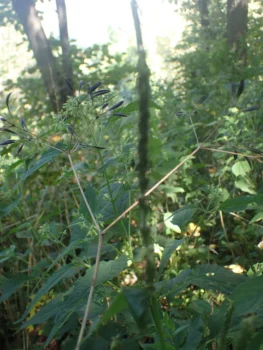
Japanese Chaff Flower: An Invasive Plant to Avoid in Your Garden
If you’ve encountered Japanese chaff flower (Achyranthes japonica) in your gardening research, it’s time to pump the brakes. While this perennial might seem like an interesting addition to your landscape, this non-native plant has earned itself quite the reputation as an unwelcome garden guest across several U.S. states.
What is Japanese Chaff Flower?
Japanese chaff flower is a perennial forb – essentially an herbaceous plant without woody stems that comes back year after year. Originally from East Asia, including Japan, Korea, and China, this plant has made itself at home in parts of the United States where it definitely wasn’t invited.
As a forb, it lacks significant woody tissue and keeps its growing points (perennating buds) at or below ground level, which helps it survive winter and bounce back each spring with renewed vigor.
Where You’ll Find It (Unfortunately)
Currently, Japanese chaff flower has established populations in Indiana, Kentucky, Ohio, and West Virginia. However, its invasive tendencies have caught the attention of wildlife officials in several other states.
- Species observed
- No observations
The Invasive Reality Check
Here’s where things get serious. Japanese chaff flower isn’t just a harmless garden escapee – it’s classified as invasive or problematic in multiple states:
- Missouri has classified it as Invasive
- New Hampshire and Wisconsin have placed it on their Prohibited lists
- Alabama and Michigan have it on their Watch Lists
When a plant earns this kind of attention from state agricultural departments, it’s sending a clear message: this species reproduces aggressively and can seriously disrupt local ecosystems.
Why You Should Skip This Plant
While Japanese chaff flower might seem unremarkable with its small, greenish flowers arranged in dense spikes, don’t let its humble appearance fool you. This plant is a master of stealth invasion. It adapts well to various growing conditions and can establish itself in zones 4-8, making it particularly troublesome across a wide geographic range.
The flowers, while present, offer minimal benefits to pollinators since they’re primarily wind-pollinated rather than designed to attract beneficial insects. So you’re not even gaining pollinator support by growing this plant.
Better Native Alternatives
Instead of risking the ecological chaos that Japanese chaff flower can cause, consider these fantastic native alternatives that will actually benefit your local ecosystem:
- Wild ginger (Asarum canadense) for shaded areas
- Wild columbine (Aquilegia canadensis) for woodland gardens
- Coral bells (Heuchera americana) for attractive foliage and pollinator appeal
- Pennsylvania sedge (Carex pensylvanica) for groundcover in natural areas
The Bottom Line
Japanese chaff flower is one of those plants that proves the old saying just because you can doesn’t mean you should. While it might establish easily and seem low-maintenance, the ecological cost is simply too high. With so many beautiful native alternatives available, there’s really no reason to invite this invasive species into your garden.
If you discover Japanese chaff flower already growing on your property, contact your local extension office or invasive species management program for guidance on safe and effective removal methods. Your local ecosystem will thank you for it!