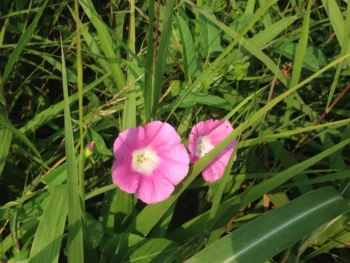
Japanese False Bindweed: A Spreading Perennial to Consider Carefully
If you’ve ever spotted delicate white funnel-shaped flowers climbing through garden borders or trailing along the ground, you might have encountered Japanese false bindweed (Calystegia hederacea). This perennial vine brings both beauty and considerations that every gardener should understand before welcoming it into their landscape.
What is Japanese False Bindweed?
Japanese false bindweed is a non-native perennial herb that has made itself quite at home across much of North America. Originally from Eastern Asia, this climbing and trailing plant belongs to the morning glory family and shares many characteristics with its ornamental cousins. As a forb herb, it lacks significant woody tissue but compensates with vigorous growth and persistent spreading habits.
You might also encounter this plant listed under several botanical synonyms, including Calystegia pellita, Calystegia pubescens, or various Convolvulus names, which can make identification a bit tricky for novice gardeners.
Where You’ll Find It Growing
This adaptable plant has established populations across a wide geographic range, thriving in states from Maine to North Carolina in the east, stretching west to Idaho, and north into Ontario and Quebec. Its ability to persist and reproduce without human intervention has allowed it to colonize diverse climates and growing conditions.
- Species observed
- No observations
Garden Appeal and Landscape Role
Japanese false bindweed offers several attractive features that might catch a gardener’s eye. The heart-shaped leaves create lush green coverage, while the white to pale pink trumpet-shaped flowers add delicate beauty from summer into fall. As a ground cover or climbing vine, it can quickly fill spaces and provide coverage where other plants might struggle.
The flowers do attract pollinators, including bees and butterflies, adding some ecological value to gardens. However, this benefit comes with important caveats that responsible gardeners should consider.
Growing Conditions and Care
One reason for this plant’s success is its remarkable adaptability. Japanese false bindweed thrives in USDA hardiness zones 4-8 and tolerates a wide range of conditions:
- Light requirements: Partial shade to full sun
- Soil preferences: Adaptable to various soil types
- Moisture needs: Moist to moderately dry conditions
- Maintenance: Minimal once established
If you choose to grow this plant, be prepared for its enthusiastic spreading habit. Regular monitoring and management will be essential to prevent it from overwhelming other garden plants or spreading beyond intended areas.
Important Considerations for Gardeners
While Japanese false bindweed isn’t difficult to grow, its non-native status and vigorous spreading nature require thoughtful consideration. This plant can quickly dominate garden spaces and potentially impact local ecosystems by competing with native vegetation.
Before planting, consider these questions:
- Do you have adequate space and willingness to manage its spread?
- Are there native alternatives that could provide similar benefits?
- Will regular maintenance to control growth fit into your gardening routine?
Native Alternatives to Consider
For gardeners seeking similar coverage and flowering appeal, several native alternatives might better serve both your landscape goals and local ecosystems. Consider exploring native morning glories, wild ginger for shaded areas, or native groundcovers that provide habitat for local wildlife while offering comparable aesthetic appeal.
The Bottom Line
Japanese false bindweed can be an attractive addition to certain garden situations, particularly where aggressive ground coverage is desired and regular management is feasible. However, its non-native status and spreading tendencies make it a plant that requires responsible cultivation practices.
If you decide to include it in your landscape, commit to regular monitoring and be prepared to manage its growth to prevent problems for neighboring properties or natural areas. Many gardeners find that exploring native alternatives provides similar benefits while supporting local ecosystems – a choice that often proves more rewarding in the long run.