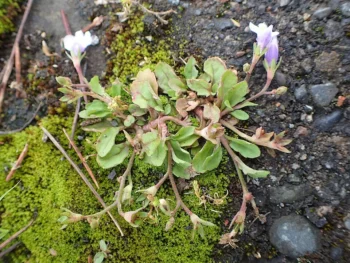
Japanese Mazus: A Tiny Ground Cover with Big Personality
If you’re looking for a ground cover that can handle foot traffic while serving up charming little flowers, Japanese mazus (Mazus pumilus) might just be the petite powerhouse your garden needs. This diminutive annual creates a carpet of green topped with delicate purple-blue blooms that seem to smile back at you with their bright white throats.
What is Japanese Mazus?
Japanese mazus is a low-growing annual forb that behaves more like a perennial in many gardens thanks to its enthusiastic self-seeding habits. Originally from East Asia, this little charmer has made itself at home across much of the United States, spreading to over 30 states from coast to coast.
You might also see this plant listed under its synonym Mazus japonicus, but don’t let the botanical name shuffle confuse you – it’s the same delightful little ground hugger either way.
Where Does Japanese Mazus Grow?
This adaptable little plant has established itself across a impressive range of states including Alabama, Arkansas, California, Connecticut, Delaware, District of Columbia, Florida, Georgia, Illinois, Indiana, Kentucky, Louisiana, Maryland, Massachusetts, Mississippi, Missouri, New Jersey, New York, North Carolina, Ohio, Oklahoma, Oregon, Pennsylvania, South Carolina, Tennessee, Texas, Virginia, Washington, West Virginia, and Wisconsin.
- Species observed
- No observations
Should You Plant Japanese Mazus?
Here’s where things get interesting. Japanese mazus isn’t native to North America, but it’s also not considered invasive in most areas. This puts it in that garden gray zone where the choice is really yours to make. Here are some factors to consider:
The Case for Japanese Mazus:
- Tolerates light foot traffic, making it perfect between stepping stones
- Blooms from spring through fall with adorable tiny flowers
- Thrives in conditions where grass struggles
- Attracts small pollinators and beneficial insects
- Low maintenance once established
- Works well in rock gardens and tight spaces
Things to Consider:
- As a non-native plant, it doesn’t provide the same ecological benefits as native alternatives
- Can self-seed readily, which some gardeners love and others find overwhelming
- Being an annual, it may not provide consistent coverage year-round in all climates
Native Alternatives to Consider:
If you prefer to stick with native plants, consider wild ginger, wild strawberry, or native sedums depending on your region and growing conditions.
Growing Japanese Mazus Successfully
Hardiness and Climate
Japanese mazus thrives in USDA zones 5-9, making it suitable for most temperate regions. Its wetland status varies by region – it typically prefers non-wetland conditions but can adapt to various moisture levels.
Ideal Growing Conditions
This accommodating little plant isn’t too fussy about its living situation:
- Light: Partial shade to full sun (though it appreciates some afternoon shade in hotter climates)
- Soil: Moist, well-draining soil is ideal, but it adapts to various soil types
- Water: Keep consistently moist, especially during establishment
- Space: Allow it room to spread, as it forms low mats
Planting and Care Tips
Getting Japanese mazus established is refreshingly straightforward:
- Plant in spring after the last frost date
- Space plants about 6-8 inches apart if planting multiples
- Water regularly during the first growing season
- Once established, it’s quite drought tolerant
- Deadheading isn’t necessary – let it self-seed if you want more coverage
- In colder zones, it may not overwinter, but often returns from self-sown seeds
Design Ideas and Uses
Japanese mazus shines in situations where you need something tough but pretty:
- Pathway companion: Plant between stepping stones or along path edges
- Rock garden star: Tuck into crevices and small spaces in rock gardens
- Lawn alternative: Use in small areas where traditional grass won’t thrive
- Container plant: Great for shallow containers and hanging baskets
- Problem solver: Fill in difficult spots under trees or in partial shade
Pollinator and Wildlife Benefits
While Japanese mazus may not support native wildlife to the same extent as indigenous plants, its small flowers do provide nectar for tiny bees and other beneficial insects throughout its long blooming season. The dense mat it forms can also provide some ground-level habitat for small creatures.
The Bottom Line
Japanese mazus is like that reliable friend who’s always up for an adventure – adaptable, cheerful, and easy to get along with. While it may not be native, it’s not causing ecological havoc either. If you need a tough little ground cover for a specific spot and don’t mind a plant that might spread beyond where you originally planted it, Japanese mazus could be a great fit for your garden toolkit.
Just remember to weigh your options and consider native alternatives first – your local ecosystem will thank you for it!