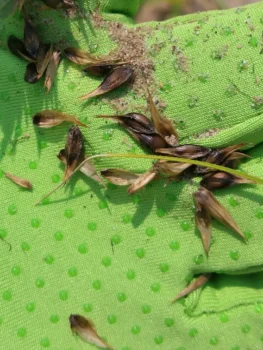
Japanese Sedge: Why This Coastal Plant Isn’t Right for Your Garden
If you’ve been researching plants for coastal landscaping or erosion control, you might have come across Japanese sedge (Carex kobomugi). While this tough, salt-tolerant sedge might seem like an appealing choice for challenging garden conditions, there are important reasons why you should think twice before adding it to your landscape.
What Is Japanese Sedge?
Japanese sedge is a perennial grass-like plant that belongs to the sedge family. Don’t let the grass-like description fool you – sedges are quite different from true grasses, with their characteristic triangular stems and unique growth patterns. This particular sedge forms dense clumps of tough, grayish-green leaves that can handle some seriously harsh conditions.
Where Does It Come From and Where Is It Now?
Originally native to East Asia – particularly Japan, Korea, and eastern China – Japanese sedge has made itself at home along the eastern coast of the United States. You can currently find established populations in Delaware, Maryland, Massachusetts, New Jersey, New York, North Carolina, Oregon, Rhode Island, and Virginia.
- Species observed
- No observations
The Problem: It’s an Invasive Species
Here’s where things get concerning. Japanese sedge isn’t just a harmless non-native plant – it’s actively listed as invasive in multiple states:
- Connecticut has classified it as Potentially Invasive, Prohibited
- Michigan has placed it on their Watch List
What does this mean for gardeners? This plant has a tendency to spread aggressively and can outcompete native vegetation, particularly in coastal dune ecosystems where it was originally introduced for erosion control.
Why You Shouldn’t Plant Japanese Sedge
While Japanese sedge might seem like a practical choice for tough coastal conditions, planting it can contribute to ecological problems. This sedge spreads through underground rhizomes (root-like stems), allowing it to form dense colonies that can crowd out native plants that local wildlife depends on.
Native coastal plants have evolved alongside local ecosystems for thousands of years, providing food and habitat that non-native species simply can’t match. When invasive plants like Japanese sedge take over, they create food deserts for native insects, birds, and other wildlife.
Better Native Alternatives
Instead of Japanese sedge, consider these native alternatives that can handle coastal conditions just as well:
- American beachgrass (Ammophila breviligulata) – Excellent for dune stabilization
- Saltmeadow cordgrass (Spartina patens) – Perfect for salt marshes and coastal edges
- Seashore rush (Juncus maritimus) – Thrives in sandy, salty conditions
- Seaside goldenrod (Solidago sempervirens) – Adds beautiful yellow flowers while supporting pollinators
What If You Already Have It?
If you discover Japanese sedge already growing on your property, consider removing it to prevent further spread. The plant’s rhizome system means you’ll need to dig up the entire root network, which can be challenging but is important for preventing regrowth.
Contact your local extension office or native plant society for guidance on removal techniques and suitable native replacements for your specific location and growing conditions.
The Bottom Line
While Japanese sedge might seem like a tough, low-maintenance plant for challenging coastal conditions, its invasive nature makes it a poor choice for responsible gardeners. By choosing native alternatives instead, you’ll create a landscape that not only looks great and handles harsh conditions but also supports local ecosystems and wildlife.
Remember: the best gardens work with nature, not against it. When we choose native plants, we’re helping to preserve the intricate web of relationships that keep our local environments healthy and thriving.